

Commons:Featured picture candidates
Other featured candidates
📽️ Media

|
Featured picture candidates  Featured picture candidates are images that the community will vote on, to determine whether or not they will be highlighted as some of the finest on Commons. This page lists the candidates to become featured pictures. The picture of the day images are selected from featured pictures. Old candidates for featured pictures are listed here. There are also chronological lists of featured pictures: 2004, 2005, 2006, 2007, 2008, 2009, 2010, 2011, 2012, 2013, 2014, 2015, 2016, 2017, 2018, 2019, 2020, 2021, 2022, 2023, 2024, 2025, 2026 and current month. For another overview of our finest pictures, take a look at our annual picture of the year election. |
|||||||||||||||||||
Formal thingsNominatingGuidelines for nominatorsPlease read the complete guidelines before nominating. This is a summary of what to look for when submitting and reviewing FP candidates:
Artworks, illustrations, and historical documentsThere are many different types of non-photographic media, including engravings, watercolors, paintings, etchings, and various others. Hence, it is difficult to set hard-and-fast guidelines. However, generally speaking, works can be divided into three types: Those that can be scanned, those that must be photographed, and those specifically created to illustrate a subject. Works that must be photographed include most paintings, sculptures, works too delicate or too unique to allow them to be put on a scanner, and so on. For these, the requirements for photography, below, may be mostly followed; however, it should be noted that photographs which cut off part of the original painting are generally not considered featurable. Works that may be scanned include most works created by processes that allow for mass distribution − for instance, illustrations published with novels. For these, it is generally accepted that a certain amount of extra manipulation is permissible to remove flaws inherent to one copy of the work, since the particular copy – of which hundreds, or even thousands of copies also exist – is not so important as the work itself. Works created to serve a purpose include diagrams, scientific illustrations, and demonstrations of contemporary artistic styles. For these, the main requirement is that they serve their purpose well. Provided the reproduction is of high quality, an artwork generally only needs one of the following four things to be featurable:
Digital restorations must also be well documented. An unedited version of the image should be uploaded locally, when possible, and cross-linked from the file description page. Edit notes should be specified in detail, such as "Rotated and cropped. Dirt, scratches, and stains removed. Histogram adjusted and colors balanced." PhotographsOn the technical side, we have focus, exposure, composition, movement control and depth of field.
On the graphic elements we have shape, volume, color, texture, perspective, balance, proportion, noise, etc.
You will maximise the chances of your nominations succeeding if you read the complete guidelines before nominating. Video and audioPlease nominate videos, sounds, music, PDFs, etc. at Commons:Featured media candidates. Set nominationsIf a group of images are thematically connected in a direct and obvious way, they can be nominated together as a set. A set should fall under one of the following types:
Adding a new nominationIf you believe that you have found or created an image that could be considered valuable, with appropriate name, quality, image description, categories and licensing, then do the following. Step 1: copy the image name into this box, after the text already present in the box, for example, Commons:Featured picture candidates/File:Your image filename.jpg. Then click on the "create new nomination" button. All single files: For renominations, simply add /2 after the filename. For example, Commons:Featured picture candidates/File:Foo.jpg/2
All set nomination pages should begin "Commons:Featured picture candidates/Set/", e.g. "Commons:Featured picture candidates/Set/My Nomination".
Step 3: manually insert a link to the created page at the top of Commons:Featured picture candidates/candidate list: Click here, and add the following line to the TOP of the nominations list:
Nominations are time-sensitive and for one-time use only. An automatic clock starts as soon as they are created. Do not create them in advance, save them for later or re-activate them. Galleries and FP categories: Please add a gallery page and section heading from the list at Commons FP galleries. Write the code as Page name#Section heading. For example: Optional: if you are not the creator of the image, please notify them using
An 'Alternative' is created by adding a sub-section to the nomination page: ====Alternative==== VotingEditors whose accounts have at least 10 days and 100 constructive, stable edits on Commons (excluding user and talk pages) can vote. Everybody can vote for their own nominations. Anonymous (IP) votes are not allowed. You may use the following templates:
You may indicate that the image has no chance of success with the template {{FPX|reason - ~~~~}}, where reason explains why the image is clearly unacceptable as a FP. The template can only be used when there are no support votes other than the one from the nominator. A well-written review helps participants (photographers, nominators and reviewers) improve their skills by providing insight into the strengths and weaknesses of a picture. Explain your reasoning, especially when opposing a candidate (which has been carefully selected by the author/nominator). English is the most widely understood language on Commons, but any language may be used in your review. A helpful review will often reference one or more of the criteria listed above. Unhelpful reasons for opposing include:
Remember also to put your signature (~~~~). Featured picture delisting candidatesOver time, featured picture standards change. It may be decided that for some pictures which were formerly "good enough", this is no longer the case. This is for listing an image which you believe no longer deserves to be a featured picture. For these, vote:
This can also be used for cases in which a previous version of an image was promoted to FP, but a newer version of the image has been made and is believed to be superior to the old version, e.g. a newly edited version of a photo or a new scan of a historical image. In particular, it is not intended for replacing older photos of a particular subject with newer photos of the same subject, or in any other case where the current FP and the proposed replacement are essentially different images. For these nominations, vote:
If you believe that some picture no longer meets the criteria for FP, you can nominate it for delisting, copying the image name into this box, after the text already present in the box: In the new delisting nomination page just created you should include:
After that, you have to manually insert a link to the created page at the top of Commons:Featured picture candidates/candidate list. As a courtesy, leave an informative note on the talk page(s) of the original creator, uploader(s), and nominator with a link to the delisting candidate. {{subst:FPC-notice-removal}} can be used for this purpose. Featured picture candidate policyGeneral rules
Featuring and delisting rulesA candidate will become a featured picture in compliance with following conditions:
The delisting rules are the same as those for FPs, with voting taking place over the same time period. The rule of the 5th day is applied to delisting candidates that have received no votes to delist, other than that of the proposer, by day 5. The FPCBot handles the vote counting and closing in most cases, current exceptions are candidates containing multiple versions of the image as well as FPXed and withdrawn nominations. Any experienced user may close the requests not handled by the bot. For instructions on how to close nominations, see Commons:Featured picture candidates/What to do after voting is finished. Also note that there is a manual review stage between when the bot has counted the votes and before the nomination is finally closed by the bot; this manual review can be done by any user familiar with the voting rules. Above all, be politePlease don't forget that the image you are judging is somebody's work. Avoid using phrases like "it looks terrible" and "I hate it". If you must oppose, please do so with consideration. Also remember that your command of English might not be the same as someone else's. Choose your words with care. Happy judging… and remember… all rules can be broken. See also
| |||||||||||||||||||


Table of contents
All users eligible to vote on FPC are invited to vote on this page.
Featured picture candidates
Voting period ends on 31 Jan 2026 at 22:23:40 (UTC) (unless closed by the 5th-day rule)
Voters must check: File name · Quality · Image description · License · Categories (what, where, who, when)
Visit the nomination page to add or modify image notes.

- Gallery: Commons:Featured pictures/Places/Interiors/Religious buildings#North Macedonia
 Info The picture depicts a hexagonal chandelier made of glass stones embedded in an octagonal church dome that is fully painted and has one monofora on each side. The Four Evangelists are depicted in the triangular corners (from bottom-left clockwise: Matthew, Mark, Luke and John), while eight prophets are visible below the monoforas (from bottom-middle clockwise: Elisha, Zephaniah, Jonah, Isaiah, Habakkuk, Elijah, Jeremiah and Ezekiel). All by me. -- Kiril Simeonovski (talk) 22:23, 22 January 2026 (UTC)
 Support -- Kiril Simeonovski (talk) 22:23, 22 January 2026 (UTC)
Voting period ends on 31 Jan 2026 at 21:39:08 (UTC) (unless closed by the 5th-day rule)
Voters must check: File name · Quality · Image description · License · Categories (what, where, who, when)
Visit the nomination page to add or modify image notes.
_(50660214338).jpg)
- Gallery: Commons:Featured pictures/Animals/Birds/Passeriformes/Fringillidae
- Info Haemorhous mexicanus (male) in California. Сreated by Becky Matsubara – uploaded/nominated by me Юрий Д.К. 21:39, 22 January 2026 (UTC)
- Support Юрий Д.К. 21:39, 22 January 2026 (UTC)
.svg/20px-Pictogram_voting_comment_(orange).svg.png) Comment Quite sad when a good image isn't used on any Wikis. Charlesjsharp (talk) 21:50, 22 January 2026 (UTC)
Comment Quite sad when a good image isn't used on any Wikis. Charlesjsharp (talk) 21:50, 22 January 2026 (UTC)
 Done In use now, thanks. Юрий Д.К. 21:57, 22 January 2026 (UTC)
- Support Oh, yes! The wow comes first and then we try to justify. Which means there is a strong subjective aesthetical / artistic component in some of the images that we never should ignore. -- Alvesgaspar (talk) 22:47, 22 January 2026 (UTC)
- Support --Laitche (talk) 03:24, 23 January 2026 (UTC)
Voting period ends on 31 Jan 2026 at 20:35:25 (UTC) (unless closed by the 5th-day rule)
Voters must check: File name · Quality · Image description · License · Categories (what, where, who, when)
Visit the nomination page to add or modify image notes.
.jpg)
- Gallery: Commons:Featured_pictures/Objects/Architectural_elements#Single_stained_glass_windows
- Info The stained glass window pictured is the number 19 in the Basilica of Notre-Dame in Geneva. Specifically, it depicts the Crucifixion, showing Jesus dying on the cross. It was created and installed in 1859 by the artist Claudius Lavergne. If anyone would like to attempt to replicate this photograph, I recommend taking it in the late afternoon, when the sun finally shines through the window; the almost hidden words "LASSEZ-DIRE" at the bottom cast a shadow over the nave of the Basilica. It remains one of the most intriguing "hidden" messages in Geneva's architecture. It is a phrase that works on three levels: it honors the regional history of Savoy, interprets Christ's silence under derision, and affirms the right of a minority faith to exist in a hostile city. Ultimately, Lavergne's stained glass window reminds the observer that, in the face of suffering or judgment, there is a certain power in simply letting the world speak, remaining focused on the Cross. We must also consider the political climate of Geneva in the mid-19th century. The Catholic community was often viewed with suspicion by the Genevan authorities. Every stone laid and every window installed was a declaration of presence that drew criticism from both the secular and Protestant press. For Lavergne and the clergy of the time, "Laissez-dire" may have been a community mantra. It was a message to the faithful: let critics mock our processions; let newspapers denigrate our dogmas. We will remain steadfast like this stained glass window. It is a motto of resilience, suggesting that the truth of the "Dieu mourant" (the dying God) needs no defense against the fleeting opinions of men. But beware, this is not just criticism: it is also a true sign of peace with the local Protestant community, free to believe as they wish, for the sake of the faith. This enigma makes Lavergne's stained glass window nr.19 so magnificent. Created, uploaded, nominated by Terragio67 -- Terragio67 (talk) 20:35, 22 January 2026 (UTC)
- Support -- Terragio67 (talk) 20:35, 22 January 2026 (UTC)
- Support --Kiril Simeonovski (talk) 21:31, 22 January 2026 (UTC)
- Support Юрий Д.К. 21:53, 22 January 2026 (UTC)
- Support --Yann (talk) 21:54, 22 January 2026 (UTC)
- Support In high resolution, this capture in vivid color and exquisite detail is extraordinary - a striking work alongside the previously promoted (01) and (02). -- Radomianin (talk) 22:23, 22 January 2026 (UTC)
Voting period ends on 31 Jan 2026 at 18:30:02 (UTC) (unless closed by the 5th-day rule)
Voters must check: File name · Quality · Image description · License · Categories (what, where, who, when)
Visit the nomination page to add or modify image notes.

- Gallery: Commons:Featured pictures/Astronomy#Stars
- Info created by European Space Agency – uploaded by OptimusPrimeBot – nominated by Don-vip -- vip (talk) 18:30, 22 January 2026 (UTC)
- Support -- vip (talk) 18:30, 22 January 2026 (UTC)
- Support --Yann (talk) 19:39, 22 January 2026 (UTC)
- Support
 Great! --Laitche (talk) 20:12, 22 January 2026 (UTC)
 - Support!!! --Terragio67 (talk) 20:46, 22 January 2026 (UTC)
- Support --Kiril Simeonovski (talk) 20:57, 22 January 2026 (UTC)
- Support Great photo Юрий Д.К. 21:52, 22 January 2026 (UTC)
- Support Captured in living, dancing light. -- Radomianin (talk) 22:28, 22 January 2026 (UTC)
Voting period ends on 31 Jan 2026 at 13:02:56 (UTC) (unless closed by the 5th-day rule)
Voters must check: File name · Quality · Image description · License · Categories (what, where, who, when)
Visit the nomination page to add or modify image notes.

- Gallery: Commons:Featured pictures/Places/Natural/Italy#Veneto
- Info All by Moroder -- Wolfgang Moroder (talk) 13:02, 22 January 2026 (UTC)
- Support -- Wolfgang Moroder (talk) 13:02, 22 January 2026 (UTC)
- Support Wonderful! --Yann (talk) 14:49, 22 January 2026 (UTC)
- Comment Great scene, resolution and sharpness. I found a slight stitching error, easy to fix. See note. Im wondering, what all these white spots are in the blue sky. --Milseburg (talk) 16:46, 22 January 2026 (UTC)
- Support --Kiril Simeonovski (talk) 20:57, 22 January 2026 (UTC)
- Support Wow! Юрий Д.К. 21:51, 22 January 2026 (UTC)
- Support Spectacular! --Laitche (talk) 03:32, 23 January 2026 (UTC)
Voting period ends on 31 Jan 2026 at 12:15:02 (UTC) (unless closed by the 5th-day rule)
Voters must check: File name · Quality · Image description · License · Categories (what, where, who, when)
Visit the nomination page to add or modify image notes.

- Gallery: Commons:Featured pictures/Animals/Arthropods/Odonata#Family : Libellulidae (Chasers, Skimmers, Darters and others)
- Info created by Granada – uploaded by Granada – nominated by Granada -- Granada (talk) 12:15, 22 January 2026 (UTC)
- Support There are eight FPs of this species but none was nominated since 2017. This one won a third prize in the WikiDaheim 2025 competition in Austria (nature/close up) and maybe it's worth a try here. Photographed just after having molted in our own garden pond. -- Granada (talk) 12:15, 22 January 2026 (UTC)
 Oppose Not sharp enough, sorry, especially when compared with most photos of darters in the FP galleries. I don't care about the noise in the bkg.-- Alvesgaspar (talk) 17:11, 22 January 2026 (UTC)
- Comment Noisy background. I suggest denoising. Юрий Д.К. 21:59, 22 January 2026 (UTC)
Voting period ends on 31 Jan 2026 at 08:20:39 (UTC) (unless closed by the 5th-day rule)
Voters must check: File name · Quality · Image description · License · Categories (what, where, who, when)
Visit the nomination page to add or modify image notes.

- Gallery: Commons:Featured pictures/Places/Natural#North Macedonia
- Info The pipeline descends from an elevation around 1,200 m to cross the river at 880 m and then ascends again to 1,190 m on the other side of the valley. The drone was elevated about 630 m above the river and 310-320 m above the ground on the sides of the valley. Created by Деан Лазаревски – uploaded by Деан Лазаревски – nominated by Kiril Simeonovski -- Kiril Simeonovski (talk) 08:20, 22 January 2026 (UTC)
- Support -- Kiril Simeonovski (talk) 08:20, 22 January 2026 (UTC)
- Oppose Good quality, illustrative of the subject. But little magic. Alvesgaspar (talk) 11:09, 22 January 2026 (UTC)
- Support Wow! Юрий Д.К. 21:49, 22 January 2026 (UTC)
Voting period ends on 31 Jan 2026 at 02:29:04 (UTC) (unless closed by the 5th-day rule)
Voters must check: File name · Quality · Image description · License · Categories (what, where, who, when)
Visit the nomination page to add or modify image notes.

- Gallery: Commons:Featured pictures/Places/Other#Japan
- Info Evening view of the pond at Oizumi Ryokuchi Park. c/u/n by Laitche (talk) 02:29, 22 January 2026 (UTC)
- Support -- Laitche (talk) 02:29, 22 January 2026 (UTC)
- Support --Kiril Simeonovski (talk) 08:24, 22 January 2026 (UTC)
- Oppose I find it interesting (and unexpected) the lattice plantation in the foreground! But the crepuscular rays are not especially attrctive to me, sorry. -- Alvesgaspar (talk) 17:19, 22 January 2026 (UTC)
- Support Amazing light and mood Юрий Д.К. 21:46, 22 January 2026 (UTC)
- New version uploaded Press Ctrl+F5 to show it. --Laitche (talk) 04:03, 23 January 2026 (UTC)
Voting period ends on 30 Jan 2026 at 17:24:27 (UTC) (unless closed by the 5th-day rule)
Voters must check: File name · Quality · Image description · License · Categories (what, where, who, when)
Visit the nomination page to add or modify image notes.
.jpg)
- Gallery: Commons:Featured pictures/Animals/Arthropods#Class : Ostracoda (Ostracods)
- Info created by Janeklass – uploaded by User:Janeklass – nominated by Janeklass -- Janeklass (talk) 17:24, 21 January 2026 (UTC)
- Support -- Janeklass (talk) 17:24, 21 January 2026 (UTC)
- Info [copied from file description] A micrograph showing two ostracods (Ostracoda), also known as seed shrimp, side by side. These tiny, bean-shaped crustaceans have their bodies entirely enclosed within a protective bivalved shell. The use of reflected light clearly highlights the shell's distinctive surface texture, color patterns, and the fine sensory hairs (setae) along the margins. A unique feature of these animals is that their eye is located inside the shell, looking through a transparent section of the wall. The image was captured using an 8x objective and focus stacking technique to ensure sharp detail across the curved surfaces of the subjects. JayCubby (talk) 17:54, 21 January 2026 (UTC)
 Question Is this a cutout, or is the background naturally black? JayCubby (talk) 17:54, 21 January 2026 (UTC)
- This is not a cutout; the background is naturally black. Janeklass (talk) 18:04, 21 January 2026 (UTC)
- Question What is the size of these? en:Ostracod says it could be from 0.2 to 32 mm. Yann (talk) 18:59, 21 January 2026 (UTC)
- I usually don't measure their exact size, but speaking from experience, since there are two in the frame, they are likely on the smaller side—under a millimeter. Janeklass (talk) 03:37, 22 January 2026 (UTC)
- Support Thanks, that photo and documentation is really interesting. -- Ikan Kekek (talk) 03:07, 22 January 2026 (UTC)
- Support --Yann (talk) 09:27, 22 January 2026 (UTC)
- Support Good photo and thanks for the explanation. An interesting species. JayCubby (talk) 14:27, 22 January 2026 (UTC)
Voting period ends on 30 Jan 2026 at 15:44:20 (UTC) (unless closed by the 5th-day rule)
Voters must check: File name · Quality · Image description · License · Categories (what, where, who, when)
Visit the nomination page to add or modify image notes.

- Gallery: Commons:Featured pictures/Places/Natural/Italy#Trentino-Alto Adige
- Info The Botzer in the Stubai Alps seen from the north (Becherhaus). All by me. -- Milseburg (talk) 15:44, 21 January 2026 (UTC)
- Support -- Milseburg (talk) 15:44, 21 January 2026 (UTC)
- Beautiful shot, excellent definition and detail. Please remove the stain to the left of the small cloud (still on the left). Terragio67 (talk) 16:35, 21 January 2026 (UTC)
- Done Oh yes, thanks for the hint. Milseburg (talk) 16:51, 21 January 2026 (UTC)
- Thanks for the corrections... Support Terragio67 (talk) 20:48, 22 January 2026 (UTC)
- Thanks for the corrections...
- Beautiful shot, excellent definition and detail. Please remove the stain to the left of the small cloud (still on the left). Terragio67 (talk) 16:35, 21 January 2026 (UTC)
- Support Wow, that's the first thing that comes to my mind. Why? For aesthetical reasons, I suppose. And the image quality is excellent. Alvesgaspar (talk) 17:24, 21 January 2026 (UTC)
- Support --Yann (talk) 19:00, 21 January 2026 (UTC)
- Comment Sorry, there are two very tenuous dark spots. I added a note for them. --Harlock81 (talk) 21:42, 21 January 2026 (UTC)
- Ok, I see what you mean. The lower one was quite round and a dust spot. I fixed that. But the upper one is quite diffuse and is a little thin cloud, I think. Milseburg (talk) 16:33, 22 January 2026 (UTC)
- Thanks. Support --Harlock81 (talk) 17:49, 22 January 2026 (UTC)
- Thanks.
- Ok, I see what you mean. The lower one was quite round and a dust spot. I fixed that. But the upper one is quite diffuse and is a little thin cloud, I think. Milseburg (talk) 16:33, 22 January 2026 (UTC)
- Support --Kiril Simeonovski (talk) 00:02, 22 January 2026 (UTC)
- Support I thought I was experiencing a bit of déjà vu, so I did a search for FPs of Übeltalferner. The existing one, File:Blick vom Signalgipfel des Wilden Freigers nach Westen.jpg, is considerably different from this photo, and this one is also deserving. This one has a more irregular form that emphasizes the flow of the glacier more. -- Ikan Kekek (talk) 05:49, 22 January 2026 (UTC)
- Support --Ermell (talk) 07:40, 22 January 2026 (UTC)
- Support --Laitche (talk) 10:58, 22 January 2026 (UTC)
Voting period ends on 30 Jan 2026 at 14:35:06 (UTC) (unless closed by the 5th-day rule)
Voters must check: File name · Quality · Image description · License · Categories (what, where, who, when)
Visit the nomination page to add or modify image notes.

- Gallery: Commons:Featured pictures/Places/Natural/Spain#Aragon
- Info Summit Pico de la Mina (2708), as seen from Forau de Aigualluts. Huesca, Aragon, Spain.
Created and uploaded by Basotxerri – nominated by MB-one -- MB-one (talk) 14:35, 21 January 2026 (UTC) - Support as nominator -- MB-one (talk) 14:35, 21 January 2026 (UTC)
- Support Great scene and capture. --Milseburg (talk) 15:48, 21 January 2026 (UTC)
- Support Юрий Д.К. 18:19, 21 January 2026 (UTC)
- Support Dramatic mist and clouds that echo the shape of the mountain help the composition. -- Ikan Kekek (talk) 05:51, 22 January 2026 (UTC)
- Support Mist and clouds are used compositionally, echoing the mountain's form and adding depth without obscuring detail. The scene remains clear, balanced and controlled rather than merely dramatic. -- Radomianin (talk) 12:55, 22 January 2026 (UTC)
- Yes, I agree. Ikan Kekek (talk) 15:05, 22 January 2026 (UTC)
Voting period ends on 30 Jan 2026 at 13:33:07 (UTC) (unless closed by the 5th-day rule)
Voters must check: File name · Quality · Image description · License · Categories (what, where, who, when)
Visit the nomination page to add or modify image notes.

- Gallery: Commons:Featured pictures/Objects/Vehicles/Land vehicles#Automobiles
- Info Vehicle registration plate on an Alfa Romeo Giulia of the Italian Polizia di Stato. Image by me. -- Aciarium (talk) 13:33, 21 January 2026 (UTC)
- Support -- Aciarium (talk) 13:33, 21 January 2026 (UTC)
- Support Nice quality and framing. --heylenny (talk/edits) 15:11, 22 January 2026 (UTC)
- Oppose Useful and good quality, but lacking wow. And the crop light at top is disturbing. Yann (talk) 17:38, 22 January 2026 (UTC)
Voting period ends on 30 Jan 2026 at 10:55:55 (UTC) (unless closed by the 5th-day rule)
Voters must check: File name · Quality · Image description · License · Categories (what, where, who, when)
Visit the nomination page to add or modify image notes.
_in_flight_Pearaing.jpg)
- Gallery: Commons:Featured pictures/Animals/Birds#Family : Ciconiidae (Storks)
- Info All by Charlesjsharp -- Charlesjsharp (talk) 10:55, 21 January 2026 (UTC)
- Support -- Charlesjsharp (talk) 10:55, 21 January 2026 (UTC)
- Comment
.svg/20px-Broom_Icon_(template-icon).svg.png) Dust spots, and it looks like the masks of the individual birds extend into the surrounding sky --Aciarium (talk) 14:59, 21 January 2026 (UTC)
Dust spots, and it looks like the masks of the individual birds extend into the surrounding sky --Aciarium (talk) 14:59, 21 January 2026 (UTC)
- No mask used, but there was colour bleed into the sky. Thanks. Charlesjsharp (talk) 15:37, 21 January 2026 (UTC)
- But they look like dust spots. And there are also tiny white spots, most prominently behind the 4th stork from the lower right. What are those? I guess the double image on the leftmost stork (probably the irksome smudging Jay refers to) is due to motion blur and can't be helped. -- Ikan Kekek (talk) 05:55, 22 January 2026 (UTC)
- One stork has lowered its legs and the white spots are its poo. And yes, some motion blur from the hard-working lead stork. There are a few insects around too. Charlesjsharp (talk) 10:02, 22 January 2026 (UTC)
- Would the color bleed be mitigable? --Aciarium (talk) 12:02, 22 January 2026 (UTC)
- (Clear cache to) see latest upload... Charlesjsharp (talk) 12:52, 22 January 2026 (UTC)
- But they look like dust spots. And there are also tiny white spots, most prominently behind the 4th stork from the lower right. What are those? I guess the double image on the leftmost stork (probably the irksome smudging Jay refers to) is due to motion blur and can't be helped. -- Ikan Kekek (talk) 05:55, 22 January 2026 (UTC)
- No mask used, but there was colour bleed into the sky. Thanks. Charlesjsharp (talk) 15:37, 21 January 2026 (UTC)
- Support --Yann (talk) 19:07, 21 January 2026 (UTC)
- Support in spite of the slightly irksome smudging. Well-handled shot with satisfactory sharpness. JayCubby (talk) 20:29, 21 January 2026 (UTC)
- Support -- Tisha Mukherjee (talk) 08:23, 22 January 2026 (UTC)
- Support -- Paramanu Sarkar (talk) 09:00, 22 January 2026 (UTC)
Voting period ends on 30 Jan 2026 at 09:32:59 (UTC) (unless closed by the 5th-day rule)
Voters must check: File name · Quality · Image description · License · Categories (what, where, who, when)
Visit the nomination page to add or modify image notes.

- Gallery: Commons:Featured pictures/Objects/Architectural elements#Doors
- Info created, uploaded and nominated by Красный -- Красный wanna talk? 09:32, 21 January 2026 (UTC)
- Support -- Красный wanna talk? 09:32, 21 January 2026 (UTC)
- Oppose The composition looks imbalanced, crop from the top too high IMO --Aciarium (talk) 15:22, 21 January 2026 (UTC)
- Oppose Unfortunately, I oppose it because it's too low to me! Where would you have cropped it? -- Ikan Kekek (talk) 05:57, 22 January 2026 (UTC)
- Oppose per Aciarium – Julian Lupyan (talk) 20:48, 21 January 2026 (UTC)
Voting period ends on 30 Jan 2026 at 09:28:13 (UTC) (unless closed by the 5th-day rule)
Voters must check: File name · Quality · Image description · License · Categories (what, where, who, when)
Visit the nomination page to add or modify image notes.
.jpg)
- Gallery: Commons:Featured pictures/Objects/Architectural elements#Others
- Info created and uploaded by ElenaLitera – nominated by Красный -- Красный wanna talk? 09:28, 21 January 2026 (UTC)
- Support -- Красный wanna talk? 09:28, 21 January 2026 (UTC)
- Support --Kiril Simeonovski (talk) 09:33, 21 January 2026 (UTC)
- Comment This motif is beautiful, so it's hard not to support the photo. I wish it were a bit sharper, though, possibly more brightly lit, and I'd prefer more generous crops that showed the entire part of the arch from the lower crop up. I will deliberate. -- Ikan Kekek (talk) 06:00, 22 January 2026 (UTC)
Voting period ends on 30 Jan 2026 at 09:12:08 (UTC) (unless closed by the 5th-day rule)
Voters must check: File name · Quality · Image description · License · Categories (what, where, who, when)
Visit the nomination page to add or modify image notes.
_Bruderwald-20251112-RM-160404.jpg)
- Gallery: Commons:Featured pictures/Fungi#Family_:_Fomitopsidaceae
- InfoWhite bone-hard polypore (Osteina obducta) in the Bruderwald forest in Bamberg. All by me -- Ermell (talk) 09:12, 21 January 2026 (UTC)
- Support -- Ermell (talk) 09:12, 21 January 2026 (UTC)
- Support --Harlock81 (talk) 21:58, 21 January 2026 (UTC)
- Support Very interesting mushroom. About how wide was that tree stump? Also, you might add a category for the black mushroom on the right. -- Ikan Kekek (talk) 06:03, 22 January 2026 (UTC)
- Info The diameter of the stump is approximately 30 cm, and the remains of the dark fungus on the right side cannot be clearly identified.--Ermell (talk) 08:09, 22 January 2026 (UTC)
- Support -- Paramanu Sarkar (talk) 09:00, 22 January 2026 (UTC)
Arothron manilensis
Voting period ends on 29 Jan 2026 at 20:45:40 (UTC)
Voters must check: File name · Quality · Image description · License · Categories (what, where, who, when)
Visit the nomination page
-
%2C_Anilao%2C_Filipinas%2C_2023-08-23%2C_DD_170.jpg/500px-Pez_globo_(Arothron_manilensis)%2C_Anilao%2C_Filipinas%2C_2023-08-23%2C_DD_170.jpg) Front view
Front view -
%2C_Anilao%2C_Filipinas%2C_2023-08-23%2C_DD_171.jpg/960px-Pez_globo_(Arothron_manilensis)%2C_Anilao%2C_Filipinas%2C_2023-08-23%2C_DD_171.jpg) Side view
Side view
,_Anilao,_Filipinas,_2023-08-23,_DD_170.jpg)
,_Anilao,_Filipinas,_2023-08-23,_DD_171.jpg)
- Gallery: Commons:Featured pictures/Animals/Fish#Family_:_Tetraodontidae_(Pufferfish)
- Info Narrow-lined puffer (Arothron manilensis), Anilao, Philippines. This pufferfish is found in tropical waters of the central Indo-Pacific. It lives in estuaries, on the sheltered top reef or lagoons from the surface to 20 metres (66 ft) depth. This diurnal species can grow up to 31 centimetres (12 in) length, is solitary and feeds on benthic invertebrates. c/u/n by Poco a poco (talk) 20:45, 20 January 2026 (UTC)
- Support -- Poco a poco (talk) 20:45, 20 January 2026 (UTC)
-
Conditionalsupport provided the white balance is corrected and the lighting is made consistent between the two. JayCubby (talk) 21:07, 20 January 2026 (UTC)
- JayCubby: I made some WB changes, what do you think? Poco a poco (talk) 20:26, 21 January 2026 (UTC)
- Looks great. Thanks, complaint
 withdrawn. JayCubby (talk) 20:28, 21 January 2026 (UTC)
- I hope your "withdrawn" doesn't confuse the bot. -- Ikan Kekek (talk) 07:38, 22 January 2026 (UTC)
- I subst'd the template. It has so far ignored it, so I think it's safe. JayCubby (talk) 14:08, 22 January 2026 (UTC)
- I hope your "withdrawn" doesn't confuse the bot. -- Ikan Kekek (talk) 07:38, 22 January 2026 (UTC)
- Looks great. Thanks, complaint
- Support --Rjcastillo (talk) 23:13, 20 January 2026 (UTC)
- Support So much detail! I particularly enjoy looking directly at the pufferfish's face. -- Ikan Kekek (talk) 03:43, 21 January 2026 (UTC)
- Support Very claer and well executed.--Ermell (talk) 09:16, 21 January 2026 (UTC)
- Support --Yann (talk) 10:17, 21 January 2026 (UTC)
- Support--Agnes Monkelbaan (talk) 10:28, 21 January 2026 (UTC)
- Support A valid set with high educational value. Both photos are of very good quality and visually appealing; the DoF is appropriate, showing enough of the surroundings to give an adequate impression of the location, but also making the fish stand out nicely. – Aristeas (talk) 11:10, 21 January 2026 (UTC)
- Support as per Ermell and Aristeas, for the set; Thank you very much for WB improvement! -- Radomianin (talk) 13:45, 22 January 2026 (UTC)
- Support Big +, left WB is very good. Now keep more time with WB problems (left-maybe some Red could be downed). Right picture could be improved too. --Mile (talk) 19:24, 22 January 2026 (UTC)
- Support --Laitche (talk) 04:30, 23 January 2026 (UTC)
Voting period ends on 29 Jan 2026 at 18:00:40 (UTC) (unless closed by the 5th-day rule)
Voters must check: File name · Quality · Image description · License · Categories (what, where, who, when)
Visit the nomination page to add or modify image notes.
.jpg)
- Gallery: Commons:Featured pictures/Objects/Architectural elements#Single stained glass windows
- Info created by and uploaded by Terragio67, nominated by Yann
- Info The Annunciation, stained glass window no. 14 of the Notre-Dame Basilica, Geneva. Created by Claudius Lavergne, and installed from 1857 to 1875. This could replace File:Vitraux de la basilique Notre-Dame, Genève 23.jpg (by me).
- Support -- Yann (talk) 18:00, 20 January 2026 (UTC)
- Support Юрий Д.К. 18:17, 20 January 2026 (UTC)
- Oppose Very nice vitral, high quality image. But not extraordinary, deserving the FP star. -- Alvesgaspar (talk) 19:08, 20 January 2026 (UTC)
- Comment I think you should do this as a delist and replace, and I would vote for the replacement. Unless you plan on nominating photos of all the windows, in which case it should be a set. -- Ikan Kekek (talk) 03:47, 21 January 2026 (UTC)
- @Terragio67: What do you think? Yann (talk) 09:26, 21 January 2026 (UTC)
- Support -- Yann, I'm really honored because you chose to nominate a picture that coincides with a previous FP of yours. I think the delist can be postponed if this picture will be promoted. Thank you very much. Terragio67 (talk) 13:24, 21 January 2026 (UTC)
- @Terragio67: What do you think? Yann (talk) 09:26, 21 January 2026 (UTC)
Procedural question
|
|---|
|
- Support Clearly a truly exceptional candidate because it shows the stained-glass window with its surroundings, both in best quality. This is much more informative as well as aesthetically much more pleasing than the traditional ‘stained glass on black(ish) background’ photos; only a few of our FPs achieve this, and from my own one I know how difficult it is to combine a proper exposure of the stained-glass window with a proper exposure of the surroundings without loosing sharpness, detail resolution, etc. – Aristeas (talk) 11:04, 21 January 2026 (UTC)
- Support I would certainly have voted for it if it had been part of a set. Although the resolution of this image is lower than that of the previously promoted images by the same author (01, 02), I still consider the quality sufficient, and the photo's pleasant atmosphere is, in my view, a key factor. Including the immediate surroundings of the window was a good choice, as it enhances the mood of the scene. I would also support a delist-and-replace nomination afterwards. -- Radomianin (talk) 14:32, 22 January 2026 (UTC)
Voting period ends on 29 Jan 2026 at 17:45:57 (UTC) (unless closed by the 5th-day rule)
Voters must check: File name · Quality · Image description · License · Categories (what, where, who, when)
Visit the nomination page to add or modify image notes.
,_Koninklijk_Museum_voor_Schone_Kunsten_Antwerpen,_2060.jpg)
- Gallery: Commons:Featured pictures/Non-photographic media/People#Nudes
- Info created by Amedeo Modigliani, scanned by the Royal Museum of Fine Arts Antwerp, uploaded and nominated by Yann
- Info Seated Nude is 1917 painting by Italian painter Amedeo Modigliani, now in the Royal Museum of Fine Arts, Antwerp, Belgium.
- Support No FP of painting by Modigliani yet. -- Yann (talk) 17:45, 20 January 2026 (UTC)
- Support This nude painting is artistically very appealing. --Kiril Simeonovski (talk) 20:39, 20 January 2026 (UTC)
- Support Excellent reproduction. -- Ikan Kekek (talk) 03:48, 21 January 2026 (UTC)
- Support Very good reproduction of an iconic work; colour, texture, and formal language are rendered with precision. -- Radomianin (talk) 09:53, 21 January 2026 (UTC)
- Support--Agnes Monkelbaan (talk) 10:27, 21 January 2026 (UTC)
- Support per Radomianin. – Aristeas (talk) 11:11, 21 January 2026 (UTC)
- Support per Radomianin. – Terragio67 (talk) 16:45, 21 January 2026 (UTC)
- Support per Radomianin. --Laitche (talk) 02:41, 22 January 2026 (UTC)
Lunulicardia hemicardium
Voting period ends on 29 Jan 2026 at 16:27:42 (UTC)
Voters must check: File name · Quality · Image description · License · Categories (what, where, who, when)
Visit the nomination page
-
 Right valve
 -
 Left valve


- Gallery: Commons:Featured pictures/Animals/Shells#Family : Cardiidae
- Info created by Llez – uploaded by Llez – nominated by Llez -- Llez (talk) 16:27, 20 January 2026 (UTC)
- Support -- Llez (talk) 16:27, 20 January 2026 (UTC)
- Support Very good as always. --Laitche (talk) 16:36, 20 January 2026 (UTC)
- Support I concur with Laitche. JayCubby (talk) 16:50, 20 January 2026 (UTC)
- Support --Mile (talk) 16:52, 20 January 2026 (UTC)
- Support --Rjcastillo (talk) 23:14, 20 January 2026 (UTC)
- Support --Ermell (talk) 09:17, 21 January 2026 (UTC)
- Support for the set. Very good technical quality with consistent lighting and focus; complementary views clearly document shell morphology, adding encyclopedic value. -- Radomianin (talk) 09:58, 21 January 2026 (UTC)
- Support--Agnes Monkelbaan (talk) 10:25, 21 January 2026 (UTC)
- Support per Radomianin (I could only paraphrase his words, so please allow me to keep the habit to use per in such clear cases). – Aristeas (talk) 11:12, 21 January 2026 (UTC)
- Support --Milseburg (talk) 15:35, 21 January 2026 (UTC)
- Support --Harlock81 (talk) 21:45, 21 January 2026 (UTC)
- Support per Radomianin. – Terragio67 (talk) 20:55, 22 January 2026 (UTC)
Voting period ends on 29 Jan 2026 at 16:22:03 (UTC) (unless closed by the 5th-day rule)
Voters must check: File name · Quality · Image description · License · Categories (what, where, who, when)
Visit the nomination page to add or modify image notes.

- Gallery: Commons:Featured pictures/Animals/Birds#Family : Phalacrocoracidae (Cormorants)
- Info Great cormorant at Tennōji Park in Osaka. c/u/n by Laitche (talk) 16:22, 20 January 2026 (UTC)
- Info No AI-based processing ;-) --Laitche (talk) 03:31, 21 January 2026 (UTC)
- Support -- Laitche (talk) 16:22, 20 January 2026 (UTC)
- Support --Rjcastillo (talk) 23:14, 20 January 2026 (UTC)
- Support Vivid bird and pleasant background. -- Ikan Kekek (talk) 03:52, 21 January 2026 (UTC)
- Support Юрий Д.К. 18:15, 21 January 2026 (UTC)
- Support --Yann (talk) 19:07, 21 January 2026 (UTC)
 Neutral We have a bunch of FPs of this species, once yours (same place) and I'm not convinced that this one is standing out. Poco a poco (talk) 20:42, 21 January 2026 (UTC)
- Support You could put some -EV. Too bright, hard for eyes. But ok compo, colors. --Mile (talk) 19:28, 22 January 2026 (UTC)
- Done Press Ctrl+F5. --Laitche (talk) 20:23, 22 January 2026 (UTC)
- Support Better now... – Terragio67 (talk) 20:58, 22 January 2026 (UTC)
Voting period ends on 29 Jan 2026 at 14:27:23 (UTC) (unless closed by the 5th-day rule)
Voters must check: File name · Quality · Image description · License · Categories (what, where, who, when)
Visit the nomination page to add or modify image notes.

- Gallery: Commons:Featured pictures/Non-photographic_media/Entertainment#Music and Opera
- Info created by John Kosh (album design), Iain Macmillan (photograph), 26 September 1969 – higher resolution uploaded by Nyescum – nominated by Heylenny -- heylenny (talk/edits) 14:27, 20 January 2026 (UTC)
- Support Per this nomination, this one is also a unique photo, and it's with a higher resolution now. -- heylenny (talk/edits) 14:27, 20 January 2026 (UTC)
- One question: How was it made higher resolution? If it was merely enlarged, that's a mistake and should be reverted. -- Ikan Kekek (talk) 01:37, 22 January 2026 (UTC)
- Apple Music has the higher resolution of the album art, that’s where it’s from. Nyescum (talk) 03:30, 22 January 2026 (UTC)
- OK, cool. Then that's what we should feature. -- Ikan Kekek (talk) 06:12, 22 January 2026 (UTC)
- Apple Music has the higher resolution of the album art, that’s where it’s from. Nyescum (talk) 03:30, 22 January 2026 (UTC)
- One question: How was it made higher resolution? If it was merely enlarged, that's a mistake and should be reverted. -- Ikan Kekek (talk) 01:37, 22 January 2026 (UTC)
- Comment You should change the file name. It isn't the cover, but the photo used for the cover. Charlesjsharp (talk) 14:38, 20 January 2026 (UTC)
- This is the album cover. This image corresponds to the published album cover; no uncropped original photograph is publicly available on Commons. heylenny (talk/edits) 14:41, 20 January 2026 (UTC)
- Comment Only the 2019 Anniversary cover, not the original. Charlesjsharp (talk) 16:28, 20 January 2026 (UTC)
- @Charlesjsharp: The photo was taken on 26 September 1969, as written in the description. heylenny (talk/edits) 18:21, 20 January 2026 (UTC)
- Support The image quality is far to be great, but well... Yann (talk) 15:39, 20 January 2026 (UTC)
- Oppose An interesting historical document, but not exceptional enough - either historically or aesthetically - to become a FP. -- Alvesgaspar (talk) 23:01, 20 January 2026 (UTC)
- One of the most recognizable album covers in history is not a FP? Anotado. heylenny (talk/edits) 02:58, 21 January 2026 (UTC)
- Support I agree with you. I consider it absurd not to feature Abbey Road. Some photos are so historical they have to be featured. -- Ikan Kekek (talk) 04:04, 21 January 2026 (UTC)
- One of the most recognizable album covers in history is not a FP? Anotado. heylenny (talk/edits) 02:58, 21 January 2026 (UTC)
- Oppose Valued images is a better project for a historical image. The image quality is not on par with the others, and it is in the public domain only under U.S. law. --Thi (talk) 09:11, 21 January 2026 (UTC)
- I think you may be confusing the purpose of Featured Pictures with Valued Images. heylenny (talk/edits) 12:23, 21 January 2026 (UTC)
- Support Agree with Ikan. This is an iconic album cover, and it was aesthetically very innovative at its time because of the complete omission of band name, album title, etc.; actually that was a statement, because it implies that the Beatles were so famous that people did not even need to read the band name in order to buy it (see the article). The reproduction is adequate, even the original photo (negative or slide film) probably doesn’t contain much more information because we already can spot some film grain. From all album covers in the collection of my parents, The White Album and this one have impressed me most, and IMHO both hold up very well more than 50 years later. And yes, the music on this album is still great, too … ;–) – Aristeas (talk) 11:28, 21 January 2026 (UTC)
- Support as per Aristeas; the image is historically significant, visually striking, and clearly documents the subject. -- Radomianin (talk) 12:05, 21 January 2026 (UTC)
Voting period ends on 29 Jan 2026 at 10:45:39 (UTC) (unless closed by the 5th-day rule)
Voters must check: File name · Quality · Image description · License · Categories (what, where, who, when)
Visit the nomination page to add or modify image notes.
_female_left_and_male_Bürgerpark.jpg)
- Gallery: Commons:Featured pictures/Animals/Arthropods/Diptera#Family : Calliphoridae (Blow Flies)
- Info Blowflies display elaborate mating behaviour. One FP which could be the same species. All by Charlesjsharp -- Charlesjsharp (talk) 10:45, 20 January 2026 (UTC)
- Support -- Charlesjsharp (talk) 10:45, 20 January 2026 (UTC)
- Support --C messier (talk) 17:16, 20 January 2026 (UTC)
- Support How far away were you from the flies? JayCubby (talk) 18:01, 20 January 2026 (UTC)
- About 1.2m I guess. Charlesjsharp (talk) 21:52, 20 January 2026 (UTC)
- Support --Rjcastillo (talk) 23:16, 20 January 2026 (UTC)
- Support -- JackyM59 (talk) 08:34, 21 January 2026 (UTC)
 Cautious support Specimens are not sufficiently sharp for exemplary encyclopedic documentation, but the strong compositional impact and visual appeal make the image convincing. -- Radomianin (talk) 10:05, 21 January 2026 (UTC)
- Support --Yann (talk) 10:19, 21 January 2026 (UTC)
- Support Poco a poco (talk) 20:38, 21 January 2026 (UTC)
- Support Nice composition. --Harlock81 (talk) 21:45, 21 January 2026 (UTC)
- Support--Agnes Monkelbaan (talk) 08:00, 22 January 2026 (UTC)
- Support -- Tisha Mukherjee (talk) 08:26, 22 January 2026 (UTC)
- Support -- Paramanu Sarkar (talk) 09:01, 22 January 2026 (UTC)
- Support per Radomianin, but I have to go to full support because I have to recognize the composition which is of exemplary simplicity and beauty. Colours appear quite saturated, but I remember such flies often shimmer with all the colours of the rainbow if the light comes from the right side, therefore I assume the saturation is realistic. – Aristeas (talk) 13:47, 22 January 2026 (UTC)
- Support Sharpness could be better.--Ermell (talk) 20:22, 22 January 2026 (UTC)
- Support --Laitche (talk) 03:36, 23 January 2026 (UTC)
Voting period ends on 29 Jan 2026 at 05:29:50 (UTC) (unless closed by the 5th-day rule)
Voters must check: File name · Quality · Image description · License · Categories (what, where, who, when)
Visit the nomination page to add or modify image notes.
_06.jpg)
- Gallery: Commons:Featured pictures/Places/Interiors/Religious buildings#Switzerland
- Info ILanz, Römisch-katholische Kirche Maria Himmelfahrt (pipe organ). What I personally like about this organ and its surroundings are the sleek vertical lines and the green colour with which the organ is finished.
All by -- Agnes Monkelbaan (talk) 05:29, 20 January 2026 (UTC) - Support -- Agnes Monkelbaan (talk) 05:29, 20 January 2026 (UTC)
- Support --C messier (talk) 17:16, 20 January 2026 (UTC)
- Oppose Sorry, but this is just a high quality image of a nice organ. Nothing exceotional here, I beileve. -- Alvesgaspar (talk) 19:04, 20 January 2026 (UTC)
- Support Юрий Д.К. 18:15, 21 January 2026 (UTC)
- Oppose I concur with Alvesgaspar. I visited the metropolitan cathedral of Mexico City during Christmas and those magestic organs made me feel meaningless. The shot is well executed but we cannot see a chunk of it, the level of detail is not the best and it doesn't seem to be of historical value Poco a poco (talk) 20:37, 21 January 2026 (UTC)
- Oppose Certainly this is a well-done and beautiful photograph and it has both aesthetic and documentary value; thank you for taking and uploading it! But in order to judge all candidates fairly and to honour the special merits of the very best ones, including your own FPs, Agnes, I have to agree with the opposers here, sorry. The casing of the church organ is a good example of a nice 20th-century (?!) church organ, but as such neither of special historical importance nor outstanding because of its beauty or other special visible features. Light, colours and the surroundings (as far as visible) are nice, but not spectacular. The technical quality is very good, but not exceptional, and there is no (recognizable) special difficulty in the taking of this photo. Sorry, – Aristeas (talk) 13:42, 22 January 2026 (UTC)
- I withdraw my nomination Thanks everyone for the comments.--Agnes Monkelbaan (talk) 16:31, 22 January 2026 (UTC)
Voting period ends on 28 Jan 2026 at 15:47:17 (UTC) (unless closed by the 5th-day rule)
Voters must check: File name · Quality · Image description · License · Categories (what, where, who, when)
Visit the nomination page to add or modify image notes.

- Gallery: Commons:Featured pictures/Animals/Birds/Passeriformes/Corvidae#Genus_:_Corvus
- Info All by -- Tisha Mukherjee (talk) 15:47, 19 January 2026 (UTC)
- Support -- Tisha Mukherjee (talk) 15:47, 19 January 2026 (UTC)
- Support Very well-done. Wolverine X-eye 17:28, 19 January 2026 (UTC)
- Support Юрий Д.К. 00:29, 20 January 2026 (UTC)
- Oppose Correct composition, image quality so-so, but not exceptional, especially when compared with other excellent images of birds. Alvesgaspar (talk) 23:05, 20 January 2026 (UTC)
- Oppose Agree, it's a common bird, too. It feels like the exposure was lifted to a proper one during postprocessing Poco a poco (talk) 20:54, 21 January 2026 (UTC)
- Support -- Paramanu Sarkar (talk) 09:01, 22 January 2026 (UTC)
- Support I somehow prefer this bird to the other one by the same author a few blocks below. It looks simple, but at the same time the whole scene feels homey and soothing, so I can look at it for a long time and connect with the subject and surroundings, via more depth and perspective. The bird looks intelligent and is in a comfier place. Good quiet colors, composition, and execution. --Argenberg (talk) 13:22, 22 January 2026 (UTC)
Voting period ends on 27 Jan 2026 at 21:52:23 (UTC) (unless closed by the 5th-day rule)
Voters must check: File name · Quality · Image description · License · Categories (what, where, who, when)
Visit the nomination page to add or modify image notes.
,_Anilao,_Filipinas,_2023-08-25,_DD_129.jpg)
- Gallery: Commons:Featured pictures/Animals/Reptiles#Family_:_Elapidae_(Elapids)
- Info Female Yellow-lipped sea krait (Laticauda colubrina), Anilao, Philippines. This venomous sea snake is found in tropical Indo-Pacific oceanic waters and it spends much of its time under water to hunt, but returns to land to digest, rest, and reproduce. It has very potent neurotoxic venom, which it uses to prey on eels and small fish. On average, the total length of a male is 875 mm (2 ft 10.4 in). Females are significantly larger, with an average total length of 1.42 m (4 ft 8 in). c/u/n by Poco a poco (talk) 21:52, 18 January 2026 (UTC)
- Support -- Poco a poco (talk) 21:52, 18 January 2026 (UTC)
- Support But for it being Poco's specialty, I wouldn't have guessed this was underwater. Great detail. I would adjust the colors a smidge, though. JayCubby (talk) 22:14, 18 January 2026 (UTC)
- Support --Rjcastillo (talk) 22:45, 18 January 2026 (UTC)
- Support Without a doubt. Lots of wow, very good composition and framing, good enough image quality. By the way, is the snake dangerous? It certainly looks scary! -- Alvesgaspar (talk) 23:04, 18 January 2026 (UTC)
- Support Cool. -- Ikan Kekek (talk) 08:00, 19 January 2026 (UTC)
- Support Even if the focus point is slightly behind the eyes --Ermell (talk) 09:30, 19 January 2026 (UTC)
- Support --Llez (talk) 18:19, 19 January 2026 (UTC)
- Support Elegant, well-balanced composition with good underwater clarity and a strong visual presence without distraction. -- Radomianin (talk) 21:24, 19 January 2026 (UTC)
- Support —UnpetitproleX (Talk) 04:02, 20 January 2026 (UTC)
- Comment What happaned to spot metering ? Eye-lock didnt work ? --Mile (talk) 11:48, 20 January 2026 (UTC)
- Question Can you explain what you mean by eye-lock in the context of Canon EOS 5DS R please? Charlesjsharp (talk) 16:34, 20 January 2026 (UTC)
- Comment I suppose 5k camera have face detection, which lock on eyes of subject. But nowdays could be locked on your pupil too. I gues 5DS have at least 1st one. --Mile (talk) 16:52, 20 January 2026 (UTC)
- Comment OK; I didn't know that sort of camera could lock in on a snake's headǃ Charlesjsharp (talk) 21:49, 20 January 2026 (UTC)
- Comment As someone who has used a 5DS, I can confidently state that there's no eye lock feature. And I'm not convinced that an R5, R6 or R7, which do have an eye-focus feature, could do so reliably underwater, with a snake. Acroterion (talk) 22:14, 20 January 2026 (UTC)
- Support Excellent and somewhat disturbing image in a challenging environment. The camera could just as easily focus on the coral heads as the snake's head. Underwater. Acroterion (talk) 22:16, 20 January 2026 (UTC)
- Support --Yann (talk) 10:21, 21 January 2026 (UTC)
- Support--Agnes Monkelbaan (talk) 10:22, 21 January 2026 (UTC)
- Weak support per Radomianin and Acroterion. (Just using ‘weak’ in order to honour that many of your other underwater FPs have perfect focus on the eye.) – Aristeas (talk) 13:05, 22 January 2026 (UTC)
Voting period ends on 27 Jan 2026 at 20:51:16 (UTC) (unless closed by the 5th-day rule)
Voters must check: File name · Quality · Image description · License · Categories (what, where, who, when)
Visit the nomination page to add or modify image notes.

- Gallery: Commons:Featured pictures/Photo techniques/Styles and Techniques#Vanishing point
- Info The Göltzschtal Bridge is the largest brick bridge in the world. It has 98 arches through which one can see parallel to the bridge's course in the middle. Created by GZagatta – uploaded by GZagatta – nominated by Zquid -- Zquid (talk) 20:51, 18 January 2026 (UTC)
- Support -- Zquid (talk) 20:51, 18 January 2026 (UTC)
- Support Nice colour balance and perspective.--Paracel63 (talk) 23:49, 18 January 2026 (UTC)
- Support I like it a lot, both the composition and the colors. -- Alvesgaspar (talk) 00:59, 19 January 2026 (UTC)
- Comment Very nice photo, and I would like to support, but just eyeballing it, I wonder about the degree of saturation of the greens and blues. -- Ikan Kekek (talk) 08:01, 19 January 2026 (UTC)
- Support Very nice motif. --Kiril Simeonovski (talk) 16:13, 19 January 2026 (UTC)
- Support Well done, but I would like to see categories that reflect symmetry and the frame effect. -- XRay 💬 19:18, 19 January 2026 (UTC)
- Support The repeating arches guide the viewer through the image, conveying space and structure in a calm, well-balanced composition. -- Radomianin (talk) 21:28, 19 January 2026 (UTC)
- Support Amazing! Юрий Д.К. 00:30, 20 January 2026 (UTC)
- Support --Laitche (talk) 16:40, 20 January 2026 (UTC)
- Support --MZaplotnik(talk) 05:40, 21 January 2026 (UTC)
- Support--Agnes Monkelbaan (talk) 10:20, 21 January 2026 (UTC)
- Neutral After comparing a lot of other photos in Category:Göltzschtalbrücke, I am bound to say the colours are indeed a bit too saturated (just as Ikan has rightly noted). This affects mostly the green and purple tones; probably the white balance is a bit too bluish, too, this would explain the all too green plants and the purple shadows. I appreciate creative use of white balance, saturation, etc., but in this case I cannot see any aesthetic advantage by the somewhat garish colours, and would appreciate if the saturation could be reduced and the white balance checked. – Aristeas (talk) 11:40, 21 January 2026 (UTC)
- It's really too bad User:GZagatta's last contribution was on September 21. It would be good to hear from them about the saturation and white balance. @GZagatta, if you're monitoring Commons, please talk to us about this. -- Ikan Kekek (talk) 06:16, 22 January 2026 (UTC)
- Indeed. Having nominated two other FPs by User:GZagatta, I can say that it was a very nice contact, but it is common that people mainly contribute to WLx and are not all the year present on Commons. I would try to provide a version with adjusted colours, similar to the improvements I have made for other FP candidates (e.g.), but in this case I am not 100% sure about the correct colours, so I cannot help out here. – Aristeas (talk) 13:13, 22 January 2026 (UTC)
- Would it be worth trying to email them? Do they have the send email option enabled on their user talk page? Ikan Kekek (talk) 15:03, 22 January 2026 (UTC)
- Done I have tried it and sent an email to GZagatta. Hope it helps, – Aristeas (talk) 17:27, 22 January 2026 (UTC)
- Would it be worth trying to email them? Do they have the send email option enabled on their user talk page? Ikan Kekek (talk) 15:03, 22 January 2026 (UTC)
- Indeed. Having nominated two other FPs by User:GZagatta, I can say that it was a very nice contact, but it is common that people mainly contribute to WLx and are not all the year present on Commons. I would try to provide a version with adjusted colours, similar to the improvements I have made for other FP candidates (e.g.), but in this case I am not 100% sure about the correct colours, so I cannot help out here. – Aristeas (talk) 13:13, 22 January 2026 (UTC)
- It's really too bad User:GZagatta's last contribution was on September 21. It would be good to hear from them about the saturation and white balance. @GZagatta, if you're monitoring Commons, please talk to us about this. -- Ikan Kekek (talk) 06:16, 22 January 2026 (UTC)
Voting period ends on 27 Jan 2026 at 15:12:44 (UTC) (unless closed by the 5th-day rule)
Voters must check: File name · Quality · Image description · License · Categories (what, where, who, when)
Visit the nomination page to add or modify image notes.

- Gallery: Commons:Featured pictures/Animals/Birds/Passeriformes#Family_:_Alaudidae_(Larks)
- Info All by -- Tisha Mukherjee (talk) 15:12, 18 January 2026 (UTC)
- Support -- Tisha Mukherjee (talk) 15:12, 18 January 2026 (UTC)
- Support --Kiril Simeonovski (talk) 15:35, 18 January 2026 (UTC)
- Support Юрий Д.К. 15:53, 18 January 2026 (UTC)
- Support I'm impressed. Wolverine X-eye 21:51, 18 January 2026 (UTC)
- Support Lively and with great lighting. Nice colours. --Paracel63 (talk) 23:46, 18 January 2026 (UTC)
- Support Impressive light and sharpness, separation from the background. I assume the little spots are insects. -- Ikan Kekek (talk) 08:03, 19 January 2026 (UTC)
- The bird was rousing, so those are possibly dust particles from the feathers. Tisha Mukherjee (talk) 15:43, 19 January 2026 (UTC)
- That makes sense. -- Ikan Kekek (talk) 04:11, 20 January 2026 (UTC)
- The bird was rousing, so those are possibly dust particles from the feathers. Tisha Mukherjee (talk) 15:43, 19 January 2026 (UTC)
- Support --Ermell (talk) 17:23, 19 January 2026 (UTC)
- Support I'd remove the white spots in the bokeh --Llez (talk) 18:18, 19 January 2026 (UTC)
- Can you be specific, which ones you are pointing to? If not distracting I will choose them to remain, for the key light is not direct and falling at an angle from the back side. It enhances the light effect I believe. Tisha Mukherjee (talk) 08:01, 20 January 2026 (UTC)
- Support —UnpetitproleX (Talk) 04:03, 20 January 2026 (UTC)
- Support The dappling dandruff is not distracting. JayCubby (talk) 16:27, 20 January 2026 (UTC)
- Support -- Paramanu Sarkar (talk) 09:02, 22 January 2026 (UTC)
- Support per Paracel63 and Ikan. – Aristeas (talk) 10:22, 22 January 2026 (UTC)
- Support Per above: truly impressive! – Terragio67 (talk) 21:02, 22 January 2026 (UTC)
- Support as per Ikan. -- Radomianin (talk) 22:32, 22 January 2026 (UTC)
Voting period ends on 27 Jan 2026 at 14:07:19 (UTC) (unless closed by the 5th-day rule)
Voters must check: File name · Quality · Image description · License · Categories (what, where, who, when)
Visit the nomination page to add or modify image notes.

- Gallery: Commons:Featured pictures/People
- Info -- A second try, almost nine years after (see here). I supppose this one will also trigger both hate and love reactions... Long live minimalism! All by Alvesgaspar (talk) 14:07, 18 January 2026 (UTC)
- Support -- Alvesgaspar (talk) 14:07, 18 January 2026 (UTC)
- Support --Kiril Simeonovski (talk) 15:35, 18 January 2026 (UTC)
- Oppose especially per arguments on the old nom. Good idea but just no enought for FP for me, sorry. (small reflected face on the metal surface, imo not enought for FP star despite even good quality) Юрий Д.К. 15:48, 18 January 2026 (UTC)
- Oppose Nothing has changed for me. Yann (talk) 18:46, 18 January 2026 (UTC)
- Support Very good composition to me. I think focusing on how much or how clear a self-portrait you see is the wrong approach. Move your eyes around the picture frame. It's a great rhythm. -- Ikan Kekek (talk) 08:05, 19 January 2026 (UTC)
- Support Good idea. --Ermell (talk) 09:42, 19 January 2026 (UTC)
- Oppose Clearly no wow here. High FPC standards only for the others? --A.Savin 11:28, 19 January 2026 (UTC)
- Not at all! Please read attentively what I wrote here. -- Alvesgaspar (talk) 11:41, 19 January 2026 (UTC)
- Support Very nice idea, good execution. The image first appears as a little riddle (how did the guy come into the metal surface? and where is the rest of his body?), until we realize that this is the reflection of the photographer, looking up to a reflecting ceiling. The combination of simplicity (minimalist composition) with complexity (riddle of reflection) distinguishes the photo and makes it a FP. – Aristeas (talk) 12:30, 19 January 2026 (UTC)
- Oppose Nice idea and amazing at the first glance, but the technical execution doesn't meet the FP standards I Think. --Milseburg (talk) 14:39, 19 January 2026 (UTC)
- Support Nice idea and well done. -- XRay 💬 19:14, 19 January 2026 (UTC)
 Weak oppose As one of those people that look for some educational value even at commons FPC, this has none, to be frank. I also do not think this was executed against technical difficulties or produced a very unique or striking result. Sorry. —UnpetitproleX (Talk) 04:05, 20 January 2026 (UTC)
- Support Agree with other supporters. Looks like a solid photograph in pure photography terms. It’s sort of conceptual, somewhat thought provoking, even full blown artistic. Also different in the flow. It does have some educational value: it can be used to teach composition, styles of photography and creative self-portraits. --Argenberg (talk) 12:02, 20 January 2026 (UTC)
- Oppose Per above: nice idea. I can't even understand what the creator saw as so extraordinary in it. heylenny (talk/edits) 01:52, 21 January 2026 (UTC)
- Oppose Per above. --Aciarium (talk) 15:31, 21 January 2026 (UTC)
Voting period ends on 27 Jan 2026 at 12:08:37 (UTC) (unless closed by the 5th-day rule)
Voters must check: File name · Quality · Image description · License · Categories (what, where, who, when)
Visit the nomination page to add or modify image notes.
.jpg)
- Gallery: Commons:Featured pictures/Objects/Vehicles/Land_vehicles#Other_land_vehicles
- Info Veteran of kolkhoz and sovkhoz, T-40 tractor in Urmetan, Tajikistan (трактор Т-40, Урметан, Таджикистан). -- Mile (talk) 12:08, 18 January 2026 (UTC)
- Support -- Mile (talk) 12:08, 18 January 2026 (UTC)
- Support --Kiril Simeonovski (talk) 15:35, 18 January 2026 (UTC)
- Support Юрий Д.К. 15:53, 18 January 2026 (UTC)
- Support Classic blue and orange complementary colours, technically excellent, impressive scenery - works for me. BigDom (talk) 19:45, 18 January 2026 (UTC)
- Oppose High quality picture, but not exceptional, inspiring or magic. Alvesgaspar (talk) 00:10, 19 January 2026 (UTC)
- Oppose I agree with Alvesgaspar, I think. I'd rather look at the scenery, and I find that the vehicles in the foreground partly screw up the view without being interesting enough in themselves. -- Ikan Kekek (talk) 08:07, 19 January 2026 (UTC)
- Comment Strangely, it appears to have been edited with some kind of AI-generated filter. heylenny (talk/edits) 23:34, 19 January 2026 (UTC)
- Comment @talk What spot ? --Mile (talk) 11:41, 20 January 2026 (UTC)
- Regretful Oppose I love the scene and compo, but please re-process the image. JayCubby (talk) 16:29, 20 January 2026 (UTC)
- Info Another try, removing some part at engine. Some are OOC. @JayCubby, Ikan Kekek --Mile (talk) 16:47, 20 January 2026 (UTC) p.S. @heylenny No.
- Support Texture is OK now.
- JayCubby (talk) 16:49, 20 January 2026 (UTC)
- Thanks for the ping. -- Ikan Kekek (talk) 07:31, 21 January 2026 (UTC)
- Oppose Agree, lighting or subject/compo or detail are not extraordinary. Poco a poco (talk) 17:25, 20 January 2026 (UTC)
- Support --MZaplotnik(talk) 05:40, 21 January 2026 (UTC)
- Support --Aciarium (talk) 14:13, 21 January 2026 (UTC)
- Weak support Not the highest quality (the stones on the ground and the trees and buildings at the left look smudged and a little bit distorted), but certainly an inspiring image: the rich palette of rust colours, combined with the bright blue, of the tractor is magical, the countless dents and scratches plus the broken windows are picturesque. The light is good because it helps to emphasize all the three-dimensional features, dents etc. I just regret that the other car and the building (?) at the right are a bit distracting and do not help the composition. – Aristeas (talk) 11:09, 22 January 2026 (UTC)
Voting period ends on 27 Jan 2026 at 10:38:55 (UTC) (unless closed by the 5th-day rule)
Voters must check: File name · Quality · Image description · License · Categories (what, where, who, when)
Visit the nomination page to add or modify image notes.

- Gallery: Commons:Featured pictures/Animals/Birds/Coraciiformes#Family_:_Meropidae_(Bee-eaters)
- Info created by Giles Laurent – uploaded by Giles Laurent – nominated by Giles Laurent -- Giles Laurent (talk) 10:38, 18 January 2026 (UTC)
- Support -- Giles Laurent (talk) 10:38, 18 January 2026 (UTC)
- Support --Kiril Simeonovski (talk) 10:49, 18 January 2026 (UTC)
- Support A magic photo, just like the kind of nomination I expect to see here! It's not just a matter of technical quality and perfect composition (which is the case, btw), it is something that makes us raise our but from the chair! -- Alvesgaspar (talk) 14:12, 18 January 2026 (UTC)
- Support -- Tisha Mukherjee (talk) 15:14, 18 January 2026 (UTC)
- Support Юрий Д.К. 15:53, 18 January 2026 (UTC)
- Support Dynamic action shot, great colours and technically excellent. BigDom (talk) 19:49, 18 January 2026 (UTC)
- Support but the processing (NR? So many fancy tools these days...) feels off. JayCubby (talk) 22:17, 18 January 2026 (UTC)
- But @Giles Laurent, could you share the RAW or PSD? I am curious what it would look like without AI processing. JayCubby (talk) 13:55, 22 January 2026 (UTC)
- I would also appreciate seeing an unprocessed version (but maybe a JPEG export instead of the Raw source file, as the latter is your best proof of ownership?) --Julesvernex2 (talk) 14:13, 22 January 2026 (UTC)
- I'm sorry but I must say that I don't like other people editing my own pictures so I'm not willing to upload a full version of the file. I hope you understand. If you're curious I however uploaded on this link (not uploaded under CC-BY-SA) a crop demo version before any denoising or sharpening was applied. I refer to this comment and this comment to why sharpening is unavoidable for shots of birds moving fast horizontally in flight -- Giles Laurent (talk) 00:28, 23 January 2026 (UTC)
- Thanks for the explanation. Your choice what you upload, of course, and the demo version was all I needed to fiddle around. I still think the sharpening could be lessened, but it is overall an improvement. JayCubby (talk) 02:20, 23 January 2026 (UTC)
- I'm sorry but I must say that I don't like other people editing my own pictures so I'm not willing to upload a full version of the file. I hope you understand. If you're curious I however uploaded on this link (not uploaded under CC-BY-SA) a crop demo version before any denoising or sharpening was applied. I refer to this comment and this comment to why sharpening is unavoidable for shots of birds moving fast horizontally in flight -- Giles Laurent (talk) 00:28, 23 January 2026 (UTC)
- I would also appreciate seeing an unprocessed version (but maybe a JPEG export instead of the Raw source file, as the latter is your best proof of ownership?) --Julesvernex2 (talk) 14:13, 22 January 2026 (UTC)
- But @Giles Laurent, could you share the RAW or PSD? I am curious what it would look like without AI processing. JayCubby (talk) 13:55, 22 January 2026 (UTC)
- Support So beautiful! -- Ikan Kekek (talk) 08:09, 19 January 2026 (UTC)
- Support --Ermell (talk) 09:37, 19 January 2026 (UTC)
- Comment Wonderful image, but IMHO the noise reduction has gone way too far here, several parts of the poor bird look artificial and like generated with some AI tool. Any chance to reduce NR a bit? Maybe there is a compromise which makes the image look more like an authentic photo without introducing too much noise. – Aristeas (talk) 11:35, 19 January 2026 (UTC)
- I'll see tonight what I can do -- Giles Laurent (talk) 11:36, 19 January 2026 (UTC)
- I think what may look artificial is the sharpening, not the noise reduction. I just tried all sharpening models and all others except this one give worse results to my eyes. Please keep in mind this is an action shot of a fast moving small bird (moving fast horizontally and not simply hovering). It's impossible to have a perfectly in focus and motion blur free shot for such action shots, especially at such a big zoom (800mm!) so sharpening is unavoidable. I was already at widest aperture, 1/2500s and ISO 4000 to freeze the subject movement and couldn't have used a faster shutter speed without going higher in ISO. To me this picture is actually one of my sharpest for a bird of this size moving this fast and with this level of zoom. Here are some examples showcasing how this level sharpening is unavoidable for such small and fast moving subjects scenarios: 1, 2, 3, 4 (which was hovering, would have been worse moving horizontally), 5 (with less favorable light), 6 -- Giles Laurent (talk) 20:26, 19 January 2026 (UTC)
- Fair enough, and I absolutely understand and appreciate the enormous technical and personal challenge to take such photographs! Sorry for bothering you, Giles. However just like other users regularly complain about noise, I feel I sometimes have to ask whether it is possible to reduce the slightly artificial look which comes with noise reduction and sharpening – because if nobody asks, we could move further and further towards even stronger noise reduction and even stronger sharpening, just because people are more and more used to that look. – Aristeas (talk) 21:16, 19 January 2026 (UTC)
- I share Aristeas' concern about slowly drifting to a standard of excessive sharpening and noise reduction. These used to be two separate issues (gritty textures for the former and waxy surfaces for the latter), but AI algorithms mix them up: smoothened out-of-focus areas, artefacts on sharp areas, and blotchy transitions. If an image isn't sharp to begin with (and I understand why this one isn't), there's not much an AI algorithm can do. In my opinion, in these cases it's better to be parsimonious with the sharpening and noise reduction. The end-user, based on whether they want to print or display an image, can add more if needed. Julesvernex2 (talk) 09:33, 20 January 2026 (UTC)
- Fair enough, and I absolutely understand and appreciate the enormous technical and personal challenge to take such photographs! Sorry for bothering you, Giles. However just like other users regularly complain about noise, I feel I sometimes have to ask whether it is possible to reduce the slightly artificial look which comes with noise reduction and sharpening – because if nobody asks, we could move further and further towards even stronger noise reduction and even stronger sharpening, just because people are more and more used to that look. – Aristeas (talk) 21:16, 19 January 2026 (UTC)
- I think what may look artificial is the sharpening, not the noise reduction. I just tried all sharpening models and all others except this one give worse results to my eyes. Please keep in mind this is an action shot of a fast moving small bird (moving fast horizontally and not simply hovering). It's impossible to have a perfectly in focus and motion blur free shot for such action shots, especially at such a big zoom (800mm!) so sharpening is unavoidable. I was already at widest aperture, 1/2500s and ISO 4000 to freeze the subject movement and couldn't have used a faster shutter speed without going higher in ISO. To me this picture is actually one of my sharpest for a bird of this size moving this fast and with this level of zoom. Here are some examples showcasing how this level sharpening is unavoidable for such small and fast moving subjects scenarios: 1, 2, 3, 4 (which was hovering, would have been worse moving horizontally), 5 (with less favorable light), 6 -- Giles Laurent (talk) 20:26, 19 January 2026 (UTC)
- I'll see tonight what I can do -- Giles Laurent (talk) 11:36, 19 January 2026 (UTC)
- Support --Llez (talk) 18:16, 19 January 2026 (UTC)
- Support—UnpetitproleX (Talk) 04:07, 20 January 2026 (UTC)
- Support--Agnes Monkelbaan (talk) 07:40, 20 January 2026 (UTC)
- Support Poco a poco (talk) 17:29, 20 January 2026 (UTC)
- Neutral Visually striking and dynamic, but technically the image shows strong processing and sharpening that give parts of the bird an unnatural appearance. Because of these technical shortcomings, I lean toward oppose, even though the composition and action shot are impressive. -- Radomianin (talk) 10:18, 21 January 2026 (UTC)
- Thank you for your review. This image of a bird this size and moving this fast horizontally has higher resolution than the average bird in flight shot due to 50 MP sensor and 800mm zoom. This higher resolution will make the sharpening appear bigger to your eyes as compared to a shot with lower resolution. I think it would be unfair to judge this image harder because of it's high resolution. Have a look at this downsized version and compare it to 6 links I have given above and you will see that this image is actually less sharpened. Also you have supported this image that had more sharpening, much worse light (90% of the bird in strong shadows), much less detail and worse bird position (bird facing away) so I'm a bit surprised that the present candidate that has much better lighting, better resolution, more details, smooth bokeh balls and excellent posture is judged harder. To me these qualities are rare to combine for a bird in flight shot, especially when moving that fast and make the image of FP level to my eyes -- Giles Laurent (talk) 10:59, 21 January 2026 (UTC)
- Thank you very much for your detailed explanation and for providing the comparison to your previous flight shot of the Lilac-breasted Roller, which I supported at the time and still fully stand by. I sincerely appreciate the enormous challenge of photographing such a small, fast-moving bird, and I must admit that I have no personal experience with subjects this difficult to capture. I recognize the high resolution, excellent posture, and well-lit composition in this image. While some areas still appear slightly processed or sharpened to my eyes, I fully understand that these adjustments are largely unavoidable given the speed of the bird and the high resolution. My Neutral vote reflects this technical hesitation, but I greatly respect the skill and effort involved, and I can see why many would consider this an FP-level image. Best regards, -- Radomianin (talk) 11:18, 21 January 2026 (UTC)
- Oppose I agree that judging images at 100% (or 150/200% on many browsers, due to display scaling) is unfair to higher resolution images. However, I don't think that's the best argument here. This is unquestionably a difficult and beautiful shot, but it is also unquestionaly overprocessed. In my opinion, a lighter touch would produce a better and more usable image. --Julesvernex2 (talk) 11:32, 21 January 2026 (UTC)
- Neutral This is probably the most difficult vote I have ever cast here. I am torn between strong support and oppose. On the one hand this is absolutely one of the most impressive, most difficult and most laudable photos on Commons. On the other hand, I have rebuked Charles more than once for the artificial impression some of his photos gave due to strong noise removal and sharpening, and it would be unfair if I would judge this photo differently. I agree completely with Julesvernex2’s remark that “a lighter touch would produce a better and more usable image”, and if some people demand that we should support only truly outstanding candidates, unfavourable post-processing must certainly be taken into account. This is also a dilemma for the photographer, and in a case like this, it’s impossible to please everyone. Many FP regulars take offense at image noise, perceiving it as flawed and unnatural. The dominance of smartphone photos certainly contributes to this impression, as they are usually radically denoised and sharpened, causing our visual habits to adapt and perceive their peculiar rendering (no noise, no or blurred fine details, but heavily sharpened edges) as correct. On the other hand, there are those annoying hardcore raw photographers like me who insist that so-called shot noise is just natural, that it should be reduced only carefully, that a completely smooth photo looks artificial, and that “painterly” smudged edges, as often produced by AI tools, have no place in a photograph. The blessing and curse of these otherwise excellent AI tools is that they no longer differentiate between noise reduction and sharpening, but now always attempt to sharpen sharp areas (even when sharpening itself is switched off) and soften blurry areas. Therefore, the editor’s control is limited, and there is no way to do it just right – neither for the photographer nor for the voter. My last resort is to vote with ‘neutral’. – Aristeas (talk) 11:00, 22 January 2026 (UTC)
- I made a new attempt by using less sharpening on the wings and here is the result. But I think I personally prefer the current version (less blurry wings) so I don't think I'm going to upload this one on Commons. I refer to this comment and this comment to why sharpening is unavoidable for shots of birds moving fast horizontally in flight -- Giles Laurent (talk) 00:22, 23 January 2026 (UTC)
- Support -- Paramanu Sarkar (talk) 09:03, 22 January 2026 (UTC)
Voting period ends on 27 Jan 2026 at 09:46:29 (UTC) (unless closed by the 5th-day rule)
Voters must check: File name · Quality · Image description · License · Categories (what, where, who, when)
Visit the nomination page to add or modify image notes.

- Gallery: Commons:Featured pictures/Places/Architecture/Castles_and_fortifications#Greece
- Info All by C messier -- C messier (talk) 09:46, 18 January 2026 (UTC)
- Tsikourios tower is a typical Maniot tower-house, with the multi-story tower and the enclosure. Now it lies abandoned. Support -- C messier (talk) 09:46, 18 January 2026 (UTC)
- Support --Kiril Simeonovski (talk) 10:06, 18 January 2026 (UTC)
- Support Nice landscape Юрий Д.К. 19:47, 18 January 2026 (UTC)
- Oppose Well composed and good quality. Nothing more. Alvesgaspar (talk) 00:12, 19 January 2026 (UTC)
- Support The combination of this foreground with that great background makes this more than just well composed and good quality to me, but a bit of judicious noise reduction in the sky would improve the picture. -- Ikan Kekek (talk) 08:10, 19 January 2026 (UTC)
- Support Excellent overview of an exemplary representative of the Mani towers. The image shows both the complete building complex and its situation on the hill over the valley and before the higher mountains, thus hinting at the historical reasons for building a fortified tower in this place. Agree that the sky could withstand some noise removal – unlike other parts of a photo, the sky usually looses no information through noise reduction. – Aristeas (talk) 11:24, 19 January 2026 (UTC)
- Support --MZaplotnik(talk) 17:53, 19 January 2026 (UTC)
- Support --Llez (talk) 18:15, 19 January 2026 (UTC)
- Support —UnpetitproleX (Talk) 04:08, 20 January 2026 (UTC)
- Oppose There's nothing wrong with the photo, and it undoubtedly documents the subject very well, but there's nothing exceptional about it to warrant FP status. AVDLCZ (talk) 19:10, 22 January 2026 (UTC)
Voting period ends on 26 Jan 2026 at 21:30:15 (UTC) (unless closed by the 5th-day rule)
Voters must check: File name · Quality · Image description · License · Categories (what, where, who, when)
Visit the nomination page to add or modify image notes.

- Gallery: Commons:Featured pictures/People/Work#Artisans (craftspeople)
- Info created & uploaded by K4tr1nas44r – nominated by Kruusamägi (talk) 21:30, 17 January 2026 (UTC)
- Support -- Kruusamägi (talk) 21:30, 17 January 2026 (UTC)
- Support Striking portrait. Slightly noisy, but sometimes, what really matters is how a photo makes you feel. -- Ikan Kekek (talk) 01:55, 18 January 2026 (UTC)
- Support --August (talk) 04:38, 18 January 2026 (UTC)
- Support --MZaplotnik(talk) 05:49, 19 January 2026 (UTC)
- Comment This would need right-side crop. --Mile (talk) 18:23, 19 January 2026 (UTC)
- @PetarM: @It's moon: Done Kruusamägi (talk) 21:21, 22 January 2026 (UTC)
- @PetarM: @It's moon:
- Oppose Average composition imo. I agree with Mile in that the image would benefit from right-side cropping. While it's a nice portrait, I don't find it exceptional. It also appears slightly tilted to me, which might need to be corrected as well. It's moon (talk) 03:36, 20 January 2026 (UTC)
* --Mile (talk) 11:36, 20 January 2026 (UTC)
Oppose ОК, Alves say react imidiately. Sometime i put cmt first.
- Question I don't understand, I didn't say anything!... Alvesgaspar (talk) 19:11, 20 January 2026 (UTC)
- @Alvesgaspar I assume Petar is referring to rule #1 of your Ten Golden Rules. -- BigDom (talk) 21:24, 20 January 2026 (UTC)
- Support This one here is more FP than this one IMO. heylenny (talk/edits) 02:56, 21 January 2026 (UTC)
- For what it's worth, I agree with you. I'd like the farmer to be just a little further back in that one, and the conservator's workshop has several visually interesting objects. -- Ikan Kekek (talk) 04:19, 21 January 2026 (UTC)
- Oppose Indeed a very nice and useful photo. But honestly I receive photos of craftspeople as more authentic (and educative) if they are really at work. In this case the man looks at the photographer like thinking “OMG, when will this photo session be finally over, so that I can continue with my real work?”. The composition is OK, but, as noted by previous commenters, not outstanding; turning the lens a little bit more to the left may have substantially improved it. Therefore I really appreciate the photo as very useful documentation, but I cannot see it as one of the very best photos on Commons, sorry. – Aristeas (talk) 10:35, 22 January 2026 (UTC)
- Oppose Technically sound and informative, but visually restrained. The frontal viewpoint and centered composition create a static, closed image with limited narrative tension. The subject's clear awareness of the camera interrupts the sense of a genuine working moment. As documentation this works well; as an FP, it lacks the compositional or expressive distinction expected at that level. -- Radomianin (talk) 12:39, 22 January 2026 (UTC)
- Comment Much better croped, did you try BW, since look old workshop. I removed O, if BW would work i could put S, maybe Alternative. --Mile (talk) 21:44, 22 January 2026 (UTC)
- Oppose I was thinking: Something is missing or wrong here, but I didn't know what. Aristeas and Radomianin wrote it very well. Yann (talk) 22:01, 22 January 2026 (UTC)
File:California nebula from Estonia.jpg, featured
Voting period ends on 26 Jan 2026 at 21:29:47 (UTC) (unless closed by the 5th-day rule)
Voters must check: File name · Quality · Image description · License · Categories (what, where, who, when)
Visit the nomination page to add or modify image notes.

- Gallery: Commons:Featured pictures/Astronomy#Nebulae
- Info created & uploaded by Taavi Niittee/Tõrva Astronoomiaklubi/Tõrva Astronomy Club – nominated by Kruusamägi (talk) 21:29, 17 January 2026 (UTC)
- Support -- Kruusamägi (talk) 21:29, 17 January 2026 (UTC)
- Support Very nice image, excellent description. --Yann (talk) 21:44, 17 January 2026 (UTC)
- Support per Yann. Beautiful photo. -- Ikan Kekek (talk) 01:56, 18 January 2026 (UTC)
- Support --C messier (talk) 09:36, 18 January 2026 (UTC)
- Support -- Giles Laurent (talk) 10:48, 18 January 2026 (UTC)
- Support For a non-space agency photograph, the quality is really astronomically good :D --PantheraLeo1359531 😺 (talk) 12:20, 18 January 2026 (UTC)
- Support Юрий Д.К. 15:53, 18 January 2026 (UTC)
- Support -- Radomianin (talk) 23:17, 18 January 2026 (UTC)
- Support Impressive object, well rendered.--Paracel63 (talk) 23:48, 18 January 2026 (UTC)
- Support --Harlock81 (talk) 17:14, 19 January 2026 (UTC)
- Support --Laitche (talk) 18:13, 19 January 2026 (UTC)
- Support --Llez (talk) 18:14, 19 January 2026 (UTC)
- Support--Agnes Monkelbaan (talk) 07:37, 20 January 2026 (UTC)
- Support Very beautiful, very educative, excellent quality (no coma, etc.), and at the same time less overprocessed as some other space images (no artifical star burst effect, etc.) – great! – Aristeas (talk) 10:13, 22 January 2026 (UTC)
- Support--Terragio67 (talk) 20:06, 22 January 2026 (UTC)
Result: 15 support, 0 oppose, 0 neutral → featured. /FPCBot (talk) 05:02, 23 January 2026 (UTC)
Voting period ends on 26 Jan 2026 at 21:09:54 (UTC) (unless closed by the 5th-day rule)
Voters must check: File name · Quality · Image description · License · Categories (what, where, who, when)
Visit the nomination page to add or modify image notes.

- Gallery: Commons:Featured_pictures/Places/Architecture/Religious_buildings#Estonia
- Info created by Mike Peel – uploaded by Mike Peel – nominated by Mike Peel -- Mike Peel (talk) 21:09, 17 January 2026 (UTC)
- Support -- Mike Peel (talk) 21:09, 17 January 2026 (UTC)
- Support --Yann (talk) 12:02, 18 January 2026 (UTC)
- Support --C messier (talk) 15:07, 18 January 2026 (UTC)
- Support Юрий Д.К. 15:53, 18 January 2026 (UTC)
- Support --MZaplotnik(talk) 05:48, 19 January 2026 (UTC)
- Weak oppose 3 of the 4 carved statues at the corners of the clock are to varying degrees noisy and unsharp. Maybe I'm being too nitpicky, but I think this is a QI but not an FP. -- Ikan Kekek (talk) 08:15, 19 January 2026 (UTC)
- Support Beautiful and charming dial with history, well framed. Taste varies. I prefer a tiny little bit noise to the mushy results of too much noise reduction, and the tiny traces of noise go well with the traces of aging on the dial. – Aristeas (talk) 11:16, 19 January 2026 (UTC)
- Support Agreed. JayCubby (talk) 18:02, 20 January 2026 (UTC)
- Weak oppose Sorry, but while I still see no real problem with the noise etc., Radomianin has a good point concerning the light, which is a bit unimpressive. Furthermore I have to admit that he is also right about that at that focal length we can today achieve even higher technical quality, and therefore expect it for a featured picture. And the focal length also suggests that it should be possible to get an even flatter image with perfectly equal distribution of sharpness by using a somewhat longer focal length; even a very common 85 mm lens should be sufficient. So there is clear room for improvement here, and so I have to change my vote on reconsideration. – Aristeas (talk) 10:30, 22 January 2026 (UTC)
- Support --Llez (talk) 18:14, 19 January 2026 (UTC)
- Support--Agnes Monkelbaan (talk) 07:35, 20 January 2026 (UTC)
- Support for more than 330 years old timepiece by Christian Ackermann. --Laitche (talk) 20:19, 20 January 2026 (UTC)
- Support --heylenny (talk/edits) 01:49, 21 January 2026 (UTC)
- Weak oppose Well-composed and historically interesting, but the small figures are not fully sharp and show some noise, and the lighting is rather flat. With a 35 mm focal length on a static subject, higher technical quality would have been expected even handheld, so despite the charm, I lean towards full oppose. -- Radomianin (talk) 10:29, 21 January 2026 (UTC)
Voting period ends on 26 Jan 2026 at 20:58:53 (UTC) (unless closed by the 5th-day rule)
Voters must check: File name · Quality · Image description · License · Categories (what, where, who, when)
Visit the nomination page to add or modify image notes.

- Gallery: Commons:Featured_pictures/Places/Architecture/Exteriors#United_Kingdom
- Info created by Mike Peel – uploaded by Mike Peel – nominated by Mike Peel -- Mike Peel (talk) 20:58, 17 January 2026 (UTC)
- Support -- Mike Peel (talk) 20:58, 17 January 2026 (UTC)
- Comment Good photo, but very oppressive - which may be the point. I'll have to try to come to terms with it. -- Ikan Kekek (talk) 01:59, 18 January 2026 (UTC)
- Support Something different, wow! -- Alvesgaspar (talk) 15:30, 18 January 2026 (UTC)
- Weak support Юрий Д.К. 19:49, 18 January 2026 (UTC)
- Support – Julian Lupyan (talk) 00:28, 19 January 2026 (UTC)
- Support --MZaplotnik(talk) 05:48, 19 January 2026 (UTC)
- Support Here the steep perspective with the leaning verticals is really beneficial – an orthogonal view of such a building could easily appear boring, but the combination of the repetitive facade with the dramatic perspective makes this a great image. – Aristeas (talk) 11:12, 19 January 2026 (UTC)
- Support per Aristeas. The sharp angle of view turns this mundane building into an interesting one. The symmetry is ever-so-slightly off but it doesn't spoil the effect. BigDom (talk) 09:50, 20 January 2026 (UTC)
- Comment You could also enter this into this month's Commons:Photo challenge for Brutalist architecture, I think it would do quite well. BigDom (talk) 13:03, 20 January 2026 (UTC)
- Thanks for that pointer, I hadn't spotted that photo challenge, added there now! Thanks. Mike Peel (talk) 14:39, 20 January 2026 (UTC)
- Support --Aciarium (talk) 15:02, 21 January 2026 (UTC)
Voting period ends on 26 Jan 2026 at 15:30:53 (UTC) (unless closed by the 5th-day rule)
Voters must check: File name · Quality · Image description · License · Categories (what, where, who, when)
Visit the nomination page to add or modify image notes.
_at_sunset_-_2025_(3).jpg)
- Gallery: Commons:Featured pictures/Places/Architecture/Palaces#Russia
- Info House of the Government of the Russian Federation. My photo Юрий Д.К. 15:30, 17 January 2026 (UTC)
- Support Юрий Д.К. 15:30, 17 January 2026 (UTC)
- Support --Kiril Simeonovski (talk) 22:03, 17 January 2026 (UTC)
- Support Very good capture of a very in-your-face building. The sky is a bit blotchy in places, but that's quite subtle and noticeable only when pixel-peeping. -- Ikan Kekek (talk) 02:04, 18 January 2026 (UTC)
- Support--Agnes Monkelbaan (talk) 07:43, 18 January 2026 (UTC)
- Support -- Giles Laurent (talk) 10:47, 18 January 2026 (UTC)
- Oppose Just yet another good photo of this building, nothing featurable. Sorry --A.Savin 13:35, 18 January 2026 (UTC)
- What your criteria for an image being featurable? It seems that you by default vote oppose for almost all FP nons that you see :) Юрий Д.К. 13:51, 18 January 2026 (UTC)
- Which is not necessarily a bad approach, that something has to be really unusually outstanding and that "oppose" is the default vote. I don't have that approach, but I respect it. -- Ikan Kekek (talk) 08:17, 19 January 2026 (UTC)
- What your criteria for an image being featurable? It seems that you by default vote oppose for almost all FP nons that you see :) Юрий Д.К. 13:51, 18 January 2026 (UTC)
- Oppose I am with A.Savin on this one. The right question is: is there anyting exceptional in this image justifying the FP star? Not in my opinion, as a high image quality is not enough. But criteria in FPC has somehow changed over the years, with people tending to stamp high quality images routinely. That is not new of course, please take a look at what I wrote in 2014 on the subject here-- Alvesgaspar (talk) 15:40, 18 January 2026 (UTC)
- FYI. Sadly, FP is becoming extremely toxic right now. Юрий Д.К. 16:07, 18 January 2026 (UTC)
- If you think that's toxic, that's because you don't remember the longstanding and personal invective from now-banned users. Disagreements about whether a photo has wow are core issues on FPC, not "toxic" just because you don't like the opinions expressed that are evaluations of the photo and not ad hominem. -- Ikan Kekek (talk) 21:08, 18 January 2026 (UTC)
- Support --MZaplotnik(talk) 05:48, 19 January 2026 (UTC)
- Support Per Юрий Д.К.. I really like this photo. heylenny (talk/edits) 23:39, 19 January 2026 (UTC)
- Support pretty much what Ikan said. The light here is pleasant and makes this photo stand out against others of the same building. BigDom (talk) 09:33, 20 January 2026 (UTC)
- Support --Aciarium (talk) 15:34, 21 January 2026 (UTC)
- Support The centered perspective perfectly matches the architectural style and the authoritarian air of the building. The beautiful warm evening light emphasizes the three-dimensional elements of the façade; at the same time, it softens the imposing impression a bit, adding some charm to it. So the photo offers an intriguing combination of authority and charm. – Aristeas (talk) 10:08, 22 January 2026 (UTC)
Voting period ends on 26 Jan 2026 at 14:53:19 (UTC) (unless closed by the 5th-day rule)
Voters must check: File name · Quality · Image description · License · Categories (what, where, who, when)
Visit the nomination page to add or modify image notes.

- Gallery: Commons:Featured pictures/Natural_phenomena/Weather#Sun
- Info Sun setting in the Namib desert, Namibia. The sun is not a perfect circle on the horizon due to atmospheric refraction, a phenomenon where Earth's atmosphere bends sunlight. As the sun appears near the horizon, its light passes through a thicker, denser layer of the atmosphere compared to when it's high in the sky. This denser air refracts, or bends, the lower edge of the sun's image more than the upper edge, causing the light from the bottom to be lifted higher than the light from the top, which squashes the sun into an oval or flattened disk. The wavy or rippled appearance of the sun's bottom edge is caused by atmospheric turbulence. While atmospheric refraction flattens the sun into an oval, turbulence within the lowest layers of the atmosphere creates the wavy motion. This phenomenon is a type of mirage caused by a temperature inversion, where cooler, denser air is trapped near the ground underneath warmer, less dense air. This layering effect further distorts the light, exaggerating the jagged, wavy appearance of the sun's lower edge. These mirages are most common over oceans or flat deserts at sunrise or sunset.
- Info created by Giles Laurent – uploaded by Giles Laurent – nominated by Giles Laurent -- Giles Laurent (talk) 14:53, 17 January 2026 (UTC)
- Support -- Giles Laurent (talk) 14:53, 17 January 2026 (UTC)
- Support Юрий Д.К. 15:32, 17 January 2026 (UTC)
- Support Love the red glow! Wolverine X-eye 18:34, 17 January 2026 (UTC)
- Support. Dwccb10 (talk) 20:14, 17 January 2026 (UTC)
- Support as per nominantion. -- Radomianin (talk) 21:42, 17 January 2026 (UTC)
- Support --Ermell (talk) 21:52, 17 January 2026 (UTC)
- Support --Kiril Simeonovski (talk) 22:47, 17 January 2026 (UTC)
- Support I’ll make a print and keep it on display in my room :) --Laitche (talk) 00:30, 18 January 2026 (UTC)
- If you invert the red and white in this picture you can get a japanese flag :) Giles Laurent (talk) 09:26, 19 January 2026 (UTC)
- Support Wow! JayCubby (talk) 00:38, 18 January 2026 (UTC)
- Support Fantastic cinematic photo! In my mind's ear, I hear the barking of jackals while looking at the sun setting over this vast desert landscape. -- Ikan Kekek (talk) 02:08, 18 January 2026 (UTC)
- Support--Agnes Monkelbaan (talk) 07:42, 18 January 2026 (UTC)
- Support The heat haze is striking :) --PantheraLeo1359531 😺 (talk) 10:36, 18 January 2026 (UTC)
- Support -- Tisha Mukherjee (talk) 15:15, 18 January 2026 (UTC)
- Oppose Sorry, but it doesn't work to me aesthetically. Alvesgaspar (talk) 00:15, 19 January 2026 (UTC)
- Thank you for your review. To me the aesthetic of the image consists of this big plasma ball falling into this vast and arid desertic landscape. The sun light going trough the thick atmosphere creates a beautiful reddish light throughout the picture and the angle of the sun compared to the ground creates beautiful and subtle rim light in the landscape that almost make it look like a painting to my eyes. To me this extremely zoomed 800mm shot showcases an extraordinary landscape that is not usually seen with the naked eye as we can't zoom into the distance with our eyes (especially in direction of the sun) and it almost looks like it could have been shot on another planet like mars. Finally I think the image is a very good illustration of the natural phenomenoms happening and described in the image description -- Giles Laurent (talk) 09:25, 19 January 2026 (UTC)
- Support Excellent documentation of atmospheric refraction, appealing minimalist composition. – Aristeas (talk) 11:07, 19 January 2026 (UTC)
- Comment And certainly an excellent example of a truly outstanding FPC candidate, just as it has been recently demanded for FPs. – Aristeas (talk) 10:10, 22 January 2026 (UTC)
- Support – Julian Lupyan (talk) 19:06, 20 January 2026 (UTC)
- Support -- Paramanu Sarkar (talk) 09:04, 22 January 2026 (UTC)
Voting period ends on 25 Jan 2026 at 20:48:45 (UTC) (unless closed by the 5th-day rule)
Voters must check: File name · Quality · Image description · License · Categories (what, where, who, when)
Visit the nomination page to add or modify image notes.

- Gallery: Commons:Featured pictures/Places/Other#Germany
- Info Citrus trees in the garden of Seehof Castle in Memmelsdorf. All by me -- Ermell (talk) 20:48, 16 January 2026 (UTC)
- Support -- Ermell (talk) 20:48, 16 January 2026 (UTC)
- Support --Kiril Simeonovski (talk) 00:15, 17 January 2026 (UTC)
- Support Well-aligned photo with carefully chosen crop. Decent detail. It would be interesting to see a similar drone photo during a Lahaina Noon. JayCubby (talk) 02:21, 17 January 2026 (UTC)
- Support -- Екатерина Борисова (talk) 05:54, 17 January 2026 (UTC)
- Support -- Radomianin (talk) 11:11, 17 January 2026 (UTC)
- Support--Agnes Monkelbaan (talk) 13:06, 17 January 2026 (UTC)
- Support Юрий Д.К. 15:36, 17 January 2026 (UTC)
- Support Poco a poco (talk) 16:25, 17 January 2026 (UTC)
- Support I prefer cut off the top but good enough. --Laitche (talk) 22:20, 17 January 2026 (UTC) And symmetric version ;-) --Laitche (talk) 23:26, 21 January 2026 (UTC)
- I prefer the top myself, as it allows for the footpath's width to be known. \ JayCubby (talk) 23:02, 17 January 2026 (UTC)
- Support --Llez (talk) 06:44, 18 January 2026 (UTC)
- Support -- Giles Laurent (talk) 10:42, 18 January 2026 (UTC)
- Oppose No wow for me, even symmetry is not there --A.Savin 13:42, 18 January 2026 (UTC)
- Oppose per A.Savin. I don't think symmetry would make this really interesting to me, though. Sorry. -- Ikan Kekek (talk) 21:09, 18 January 2026 (UTC)
- Oppose As above. Alvesgaspar (talk) 00:17, 19 January 2026 (UTC)
- Support Much wow for me. It’s exactly the little variation of the symmetry which makes this image charming. Look at the individual trees and their shadows – each one is different and has its own shape, adding pleasant variation to the common pattern. – Aristeas (talk) 11:06, 19 January 2026 (UTC)
- Oppose Symmetry per above. --Aciarium (talk) 15:33, 21 January 2026 (UTC)
Jeunes filles jouant sur des hippocampes
Voting period ends on 24 Jan 2026 at 12:25:03 (UTC)
Voters must check: File name · Quality · Image description · License · Categories (what, where, who, when)
Visit the nomination page


- Gallery: Commons:Featured pictures/Objects/Sculptures#Statues outdoors
- Info Yes, I know that a picture of one of the statues was promoted as a featured picture just a few days ago. But this statue is only one part of the entire artwork, as the name suggests: "Jeunes filles..." and not "Jeune fille...". The complete artwork, created in 1964 by Édouard-Marcel Sandoz, consists of three statues located on the Quai Maria Belgia in Vevey. One of them is the central figure in the "Fontaine du jardin du rivage," and the other two are in close proximity on the shore of Lake Geneva. With this set, I want to present the complete artwork with its three "Jeunes filles jouant sur des hippocampes" (young girls playing on the hippocamps)
Camera location 
View all coordinates using: OpenStreetMap 
created by Llez – uploaded by Llez – nominated by Llez -- Llez (talk) 12:25, 15 January 2026 (UTC)
- Support -- Llez (talk) 12:25, 15 January 2026 (UTC)
- Support Юрий Д.К. 21:30, 15 January 2026 (UTC)
- For the middle photo, how far does the underwater base extend? It would in theory be nice not to crop it. Overall, though, I think this set is deserving. Support -- Ikan Kekek (talk) 06:07, 16 January 2026 (UTC)
- Info There are four extensions of equal length, one of them is completely visible in the middle. The left one you can see completely in the original RAW. I cropped the left part of the picture for 1.) the background is not the best and 2.) for symmetry. --Llez (talk) 06:21, 16 January 2026 (UTC)
- How does it look photographed from the other side? -- Ikan Kekek (talk) 07:17, 16 January 2026 (UTC)
- Info @ Ikan Kekek: On the other side is a very busy background, houses, people and so on (see Google maps satellite). Therefore I made no photo, and if you look in Google for pictures, all are taken from this side, I found no one from the opposite side. --Llez (talk) 09:40, 16 January 2026 (UTC)
- Support --MZaplotnik(talk) 11:07, 18 January 2026 (UTC)
- Oppose Not special enough to me, sorry. Alvesgaspar (talk) 00:19, 19 January 2026 (UTC)
- Oppose Dies sind drei sehr gute Fotos, wahrscheinlich so gut, wie es unter den Umständen (Lage der Kunstwerke, Jahres- und Tageszeit, Wetter) nur möglich war, und sie bilden eine ausgezeichnete Dokumentation. Zwei Aspekte verhindern aber meiner Meinung nach, dass sie als Set herausragend sind. Zum einen spielt bei Motiven wie diesen Statuen das Licht eine entscheidende Rolle. Leider ist das Licht, mit dem Du arbeiten musstest, nicht besonders vorteilhaft – es lässt weder das Wasser oder die Figuren strahlen noch ist es so weich und schmeichelnd, dass es harte Schatten verhindert und eine intime Nähe erzeugt; es ist irgendwo dazwischen, wie es eben leider meistens ist (alle Fotografierenden können ein Lied davon singen, fürchte ich), und daher etwas langweilig. Beim jüngst neu gekürten FP war das etwas besser, der Fotograf hatte mehr Glück und das Licht gibt seiner Aufnahme eine leichte Dramatik, die sehr gut zu der Statue passt. – Zum anderen glaube ich, dass es nahezu unmöglich ist, ein exzellentes Set mit allen drei Statuen zu fotografieren, weil die Statuen zu unterschiedlich aufgestellt sind – die zweite hat einfach eine ganz andere Umgebung. Es ist sehr gut, dass Du sie zwischen den beiden anderen pla(t)ziert hast, sodass diese sie gewissermaßen rahmen; aber leider bleibt der Hintergrund dieser mittleren Statue einfach recht unruhig und unharmonisch, er lenkt stark von der Statue ab, sodas Gesamtaufnahmen dieser Figur wohl immer fotografisch unbefriedigend bleiben. (Der Baum wäre ja gut, aber die Bänke, die beiden komischen Podeste (?) im Wasser, das Gebäude hinten führen zu einem unerfreulichen Hintergrund.) Am besten sind Licht und Hintergrund beim dritten Bild, in dem der helle Bereich im Wasser und die konzentrischen Wellen um den Sockel die Statue eher hervorheben. Das bräuchten wir auch bei den beiden anderen Aufnahmen, aber wie gesagt, ich fürchte, dass das zumindest beim mittleren Bild einfach aufgrund der örtlichen Situation schwer bis unmöglich ist. Sorry – und danke für Deine sehr guten und zur Dokumentation sehr wertvollen Bilder! – Aristeas (talk) 09:54, 22 January 2026 (UTC)
Voting period ends on 24 Jan 2026 at 10:25:59 (UTC) (unless closed by the 5th-day rule)
Voters must check: File name · Quality · Image description · License · Categories (what, where, who, when)
Visit the nomination page to add or modify image notes.
- Gallery: Commons:Featured pictures/Places/Architecture/Exteriors#United Kingdom
- Info created, uploaded and nominated by me -- BigDom (talk) 10:25, 15 January 2026 (UTC)
- Support -- BigDom (talk) 10:25, 15 January 2026 (UTC)
- Support -- Aciarium (talk) 13:32, 15 January 2026 (UTC)
- Support Pretty and characteristic detail of the building, with favourable light, good colours and a well-balanced composition. – Aristeas (talk) 16:54, 16 January 2026 (UTC)
- Support Per Aristeas, Photographed at a nice angle.--Famberhorst (talk) 06:07, 17 January 2026 (UTC)
- Support--Agnes Monkelbaan (talk) 13:02, 17 January 2026 (UTC)
- Support --Llez (talk) 06:42, 18 January 2026 (UTC)
- Support -- Giles Laurent (talk) 10:41, 18 January 2026 (UTC)
- Support --MZaplotnik(talk) 11:06, 18 January 2026 (UTC)
- Oppose A correct and well composed good quality image, nothing more. -- Alvesgaspar (talk) 15:46, 18 January 2026 (UTC)
- Oppose per Alvesgaspar. -- Ikan Kekek (talk) 21:11, 18 January 2026 (UTC)
- Support What may appear restrained is precisely the strength of this image. The controlled angle, clean framing and balanced light reduce the subject to structure, proportion and material - core qualities of architectural photography. Its clarity and precision go beyond mere correctness and justify FP status. -- Radomianin (talk) 12:47, 22 January 2026 (UTC)
Timetable (day 5 after nomination)
Sun 18 Jan → Fri 23 Jan
Mon 19 Jan → Sat 24 Jan
Tue 20 Jan → Sun 25 Jan
Wed 21 Jan → Mon 26 Jan
Thu 22 Jan → Tue 27 Jan
Fri 23 Jan → Wed 28 Jan
Timetable (day 9 after nomination, last day of voting)
Wed 14 Jan → Fri 23 Jan
Thu 15 Jan → Sat 24 Jan
Fri 16 Jan → Sun 25 Jan
Sat 17 Jan → Mon 26 Jan
Sun 18 Jan → Tue 27 Jan
Mon 19 Jan → Wed 28 Jan
Tue 20 Jan → Thu 29 Jan
Wed 21 Jan → Fri 30 Jan
Thu 22 Jan → Sat 31 Jan
Fri 23 Jan → Sun 01 Feb
Closing nominations manually
The following description explains how to close nominations manually. Normally this is not necessary, as FPCBot takes care of counting the votes, closing and archiving the nominations. When the Bot has counted the votes, a user needs to check and approve the result; everything else is done by the Bot. Therefore, the following instructions are normally only needed for delist-and-replace nominations that the Bot cannot (yet) process, and in case the Bot malfunctions. The closing can be done by any experienced user. If you need help, just ask on the FPC talk page.
Closing a featured picture nomination
- On Commons:Featured picture candidates/candidate list click on the title/link of the nomination, then [edit].
- Add the result of the voting at the bottom (on a new line):
{{FPC-results-reviewed|support=x|oppose=x|neutral=x|featured=(“yes” or “no”)|gallery=xxx|sig=~~~~}}
(You can leave thegalleryparameter blank if the image was not featured. If the nomination contains alternatives, you must add thealternative=xxxparameter with the name of the selected image between thegalleryand thesigparameter. See {{FPC-results-reviewed}} for examples and more explanations.) - Edit the title of the nomination and add
featuredornot featuredafter the link – for example:
=== [[:File:XXXXX.jpg]] ===
becomes
=== [[:File:XXXXX.jpg]], featured === - Save your edit.
- Add the result of the voting at the bottom (on a new line):
- If it is featured:
- Add the picture to the list of the four most recently featured pictures of an appropriate gallery of Commons:Featured pictures, list as the first one and delete the last one, so that the number is four again.
- Add the picture to the appropriate featured picture gallery page and section. Click on the most appropriate link beneath where you just added it as one of the four images on Commons:Featured pictures, list to find the gallery page, and search for the correct section. (An image should only appear ONE time in the galleries. After a successful nomination, the image can be placed in several of the Featured pictures categories.)
- Add the template
{{Assessments|featured=1}}to the image description page.- If it was an alternative image or part of a set nomination, use the
com-nomparameter. For example, if File:Foo.jpg was promoted in the nominationCommons:Featured picture candidates/File:Bar.jpg, use{{Assessments|featured=1|com-nom=Bar.jpg}}You also need thecom-nomparameter if the image gets renamed. - If the image is already featured on another Wikipedia, just add
featured=1to the {{Assessments}} template. For instance,{{Assessments|enwiki=1}}becomes{{Assessments|enwiki=1|featured=1}}
- If it was an alternative image or part of a set nomination, use the
- Head over to the structured data for the image and add the “Commons quality assessment” claim (P6731) “Wikimedia Commons featured picture” (Q63348049).
- Add the picture to the chronological archives of featured pictures. Place it at the end of the gallery using this format:
File:xxxxx.jpg|# '''Title'''<br>created by [[User:xxxxx|xxxxx]], uploaded by [[User:xxxxx|xxxxx]], nominated by [[User:xxxxx|xxxxx]]<br> {{s|xxx}}, {{o|xxx}}, {{n|xxx}}- The
#should be replaced by 1 for the first image nominated that month, and counts up after that. Have a look at the other entries on that page for examples. (If you want to do everything perfectly, link that number to the nomination subpage, just like FPCBot does this. It allows users to jump directly to the nomination.) - The
Titleshould be replaced by the bare name of the featured picture, without the ‘File:’ or the file extension (such as .jpg .tif .svg). - The
xin{{s|x}}, {{o|x}}, {{n|x}}should be replaced by the count of support, oppose, and neutral votes respectively. - If the nomination was a set nomination, use this format:
File:xxxxx.jpg|# '''Set: Title (Z files)'''<br>created by [[User:xxxxx|xxxxx]], uploaded by [[User:xxxxx|xxxxx]], nominated by [[User:xxxxx|xxxxx]]<br> {{s|x}}, {{o|x}}, {{n|x}}
Replace theZin(Z files)by the count of images in the set, and use the name of the first image from the set instead ofFile:xxxxx.jpgand for the title.
- The
- Add
== FP promotion ==
{{FPpromotion|File:XXXXX.jpg}}to the talk page of the nominator. For set nominations, use:== Set Promoted to FP ==, using the names of the set files instead of the XXXXXX and the title of the set instead of YYYYY.
<gallery>
File:XXXXXX.jpg
File:XXXXXX.jpg
</gallery>
{{FPpromotionSet2|YYYYY}} - Add
== FP promotion ==
{{FPpromotedUploader|File:XXXXX.jpg}}to the talk page of the user who has uploaded the image, if that user is not the same as the nominator. - Add
== FP promotion ==
{{FPpromotedCreator|File:XXXXX.jpg}}to the talk page of the creator, if the author is a different Commons user than nominator and uploader.
- As the last step (whether the image is featured or not; including {{FPX}}-d, {{FPD}}-d and {{Withdraw}}-n nominations), you have to move the transclusion (the {{ }} and the text within those) of the nomination to the current log page.
- To find the current log page, visit the first page of the log for this month. If the header of that page contains a link with the text “Next part of this month”, the log for this month has been split into several parts because it contains too many entries. Click on the “Next part …” link and repeat this until you reach a page where the header does not offer a “Next part …” link; that’s the last and current log page.
- Now open Commons:Featured picture candidates/candidate list, click on [edit], and find the transclusion of the nomination you are closing. It will be of the form:
{{Commons:Featured picture candidates/File:XXXXX.jpg}}or:{{Commons:Featured picture candidates/Set/XXXXX}}. - Copy that line to the bottom of the current log page and save that page. Then remove the same line from the candidate list and save that page.
Closing a delisting nomination
- On Commons:Featured picture candidates/candidate list click on the title/link of the candidate image, then [edit].
Add the result of the voting at the bottom (on a new line):{{FPC-delist-results-reviewed|delist=x|keep=x|neutral=x|delisted=yes/no|sig=~~~~}}
(for example see Commons:Featured picture candidates/removal/File:Ensifera ensifera (22271195865).jpg) - Edit the title of the delisting nomination and add
delistedornot delistedafter the image title; for example:=== [[:File:XXXXX.jpg]] ===
becomes=== [[:File:XXXXX.jpg]], delisted === - Move the transclusion of the nomination to the current log page; please see above for an explanation how to find the current log page and how to move the nomination to it.
- If the outcome was not delisted, stop here. If it is delisted:
- Remove the picture from Commons:Featured pictures, list and any subpages.
- Edit the picture's description as follows:
- In the {{Assessments}} template on the image description page, change
featured=1tofeatured=2(do not remove the {{Assessments}} template; do not change anything related to its status in other featured picture processes). If the image description page uses the old {{Featured picture}} template, replace it with{{Assessments|featured=2}}. - Remove the image from all categories beginning with "Featured [pictures]" (example: Featured night photography, Featured pictures from Wiki Loves Monuments 2016, Featured pictures of Paris); but not from categories about featured pictures on specific Wikipedia editions, like Category:Featured pictures on Wikipedia, English.
- Remove the "Commons quality assessment" claim (P6731) "Wikimedia Commons featured picture" (Q63348049) from the picture's Structured data.
- In the {{Assessments}} template on the image description page, change
- Add a delisting-comment to the original entry in the chronological archive of featured pictures in bold-face, e. g. delisted 2007-07-19 (1–6) with (1–6) meaning 1 keep and 6 delist votes (change as appropriate). The picture must not be removed from the chronological archives.
- If this is a Delist and Replace, the delisting and promotion must both be done manually. To do the promotion, follow the steps in the section above. Note that the assessment tag on the file page and the promotion tag on the nominator's talk page won't pick up the /replace subpage that these nominations use.
Archiving a withdrawn nomination
If a nomination has been withdrawn by the nominator by using {{Withdraw}} or is cancelled with {{FPX}} or {{FPD}}, wait 24 hours after the nomination was last edited. If there has been no objection to the cancellation within this time, the nomination can simply be archived. Just move the transclusion of the nomination to the current log page; please see above for an explanation how to find the current log page and how to move the nomination to it.


_(50660214338).jpg)
_(50660214338).jpg)
.jpg)
.jpg)
.jpg)


.jpg)
.jpg)


_in_flight_Pearaing.jpg)
_in_flight_Pearaing.jpg)


.jpg)
.jpg)
_Bruderwald-20251112-RM-160404.jpg)
.jpg)


,_Koninklijk_Museum_voor_Schone_Kunsten_Antwerpen,_2060.jpg)


_female_left_and_male_Bürgerpark.jpg)
_on_a_green_leaf.jpg)
_06.jpg)
_06.jpg)


,_Anilao,_Filipinas,_2023-08-25,_DD_129.jpg)


![[1]](https://commons.wikimedia.org/w/index.php?title=File%3ABlick_durch_die_Gew%C3%B6lbe_an_der_G%C3%B6tzschtalbr%C3%BCcke.jpg&diff=1149977146&oldid=1149714191)


_edited.jpg)


.jpg)

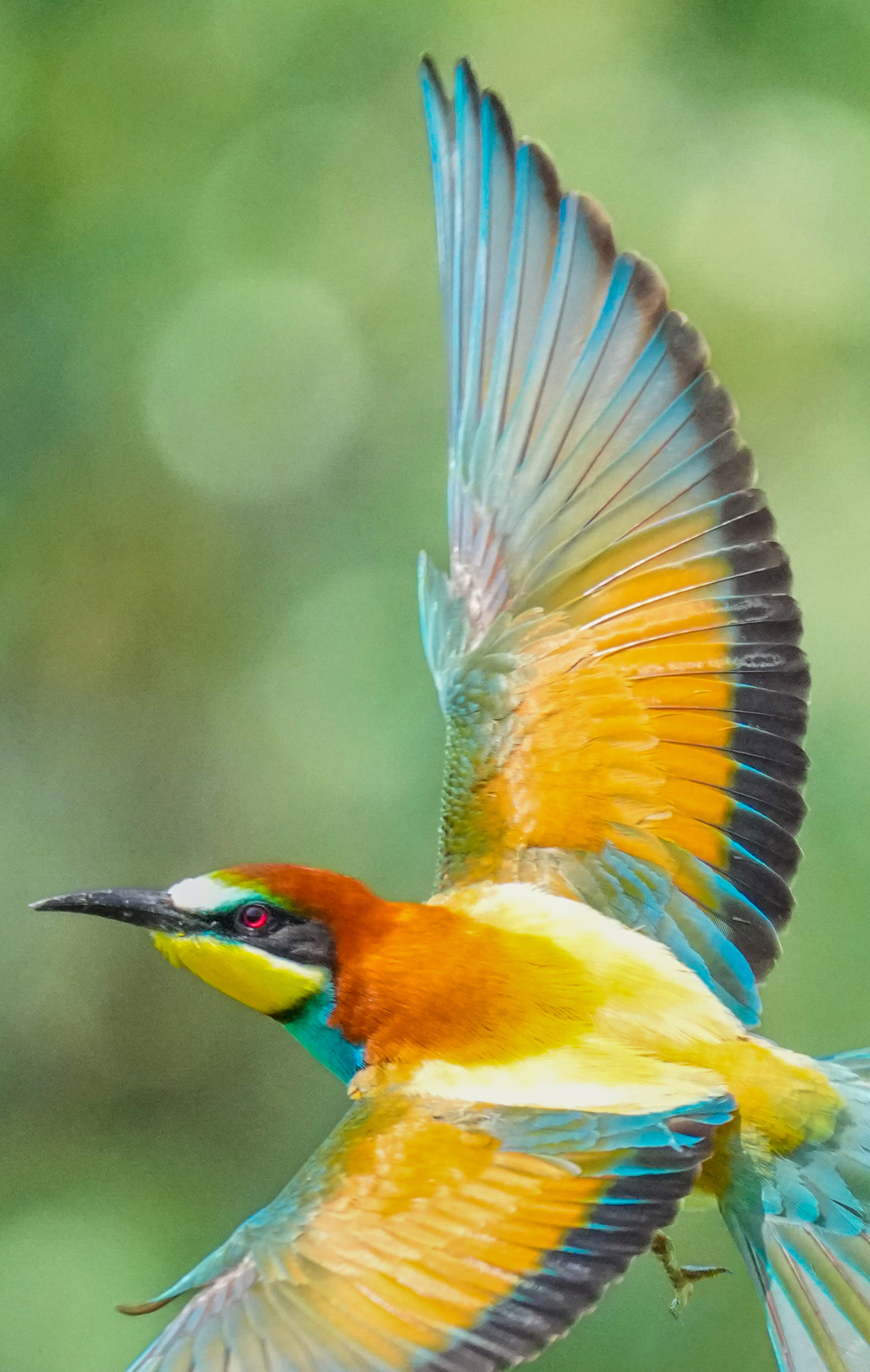


,_জাতীয়_উদ্ভিদ_উদ্যান_ঢাকা.jpg)


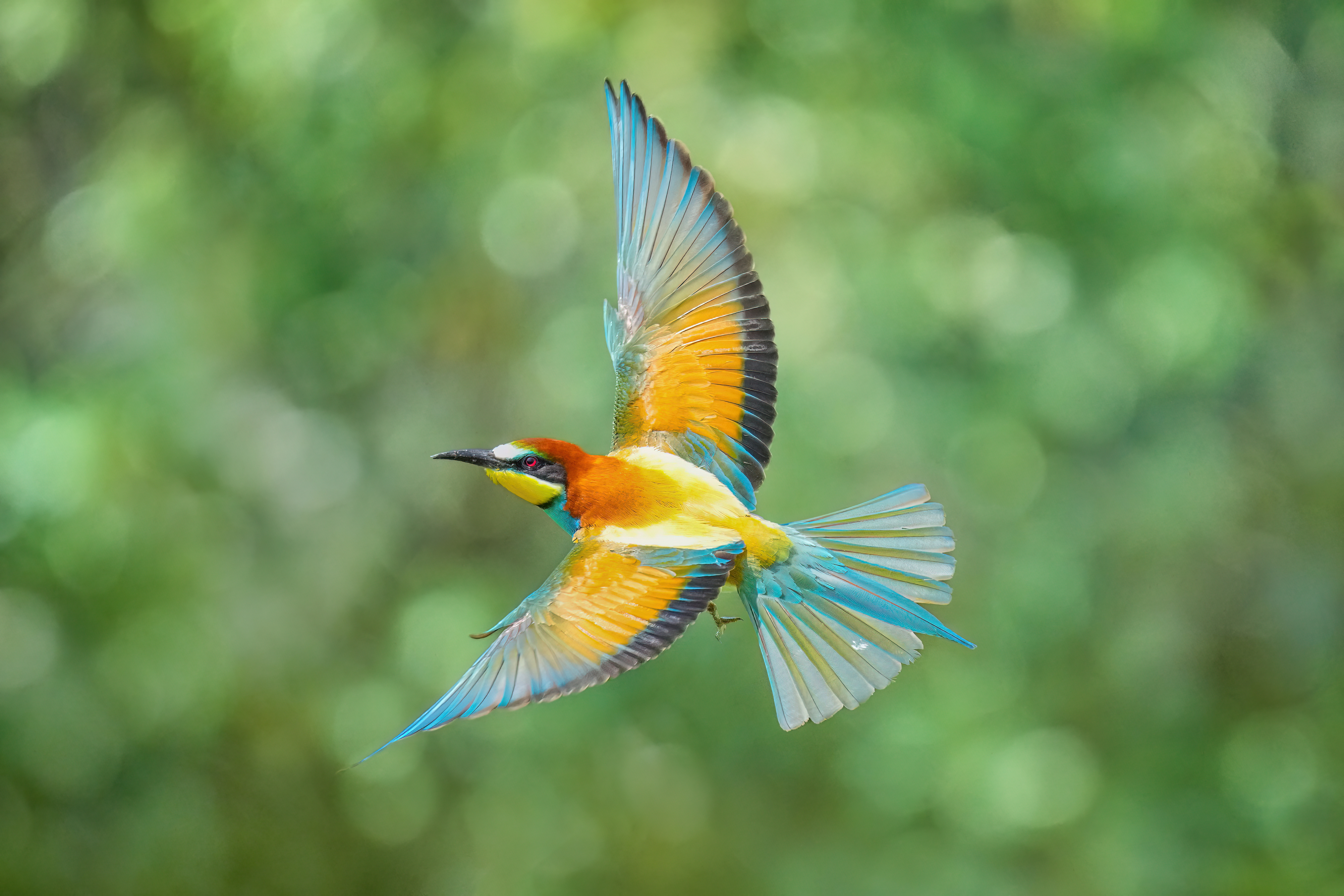


_at_sunset_-_2025_(3).jpg)
_at_sunset_-_2025_(3).jpg)


.jpg)